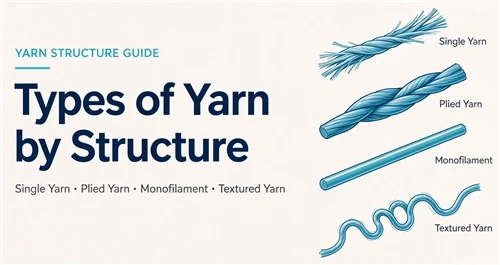
Yarn can be classified in different ways, including by fiber type, spinning method, yarn structure, and manufacturing process. Understanding these classifications helps textile manufacturers, fabric producers, and buyers select the right yarn for a specific application.
Based on yarn structure and filament arrangement, common types include single yarn, plied yarn, monofilament yarn, and textured yarn. Each type has different characteristics and is suitable for different textile applications.
Single Yarn
Single yarn is made from a single bundle of fibers twisted together during the spinning process. It is one of the most basic yarn structures and is widely used in both woven and knitted textiles.

The fibers are held together by twist, giving the yarn enough strength and stability for further processing. Depending on the raw material used, single yarn can be made from natural fibers, synthetic fibers, or a blend of different fibers.
For example, cotton, polyester, viscose, and other fibers can be spun into single yarn. When different types of fibers are combined before or during spinning, the resulting yarn can provide a balance of properties from the component fibers.
Common applications of single yarn
Single yarn is widely used for:
The final performance of a single yarn depends on factors such as fiber type, yarn count, twist, fiber length, and spinning method.
Plied Yarn
Plied yarn, also known as ply yarn, is produced by twisting two or more single yarns together. Unlike single yarn, which consists of one spun yarn structure, plied yarn combines multiple yarns to create a stronger and more stable structure.
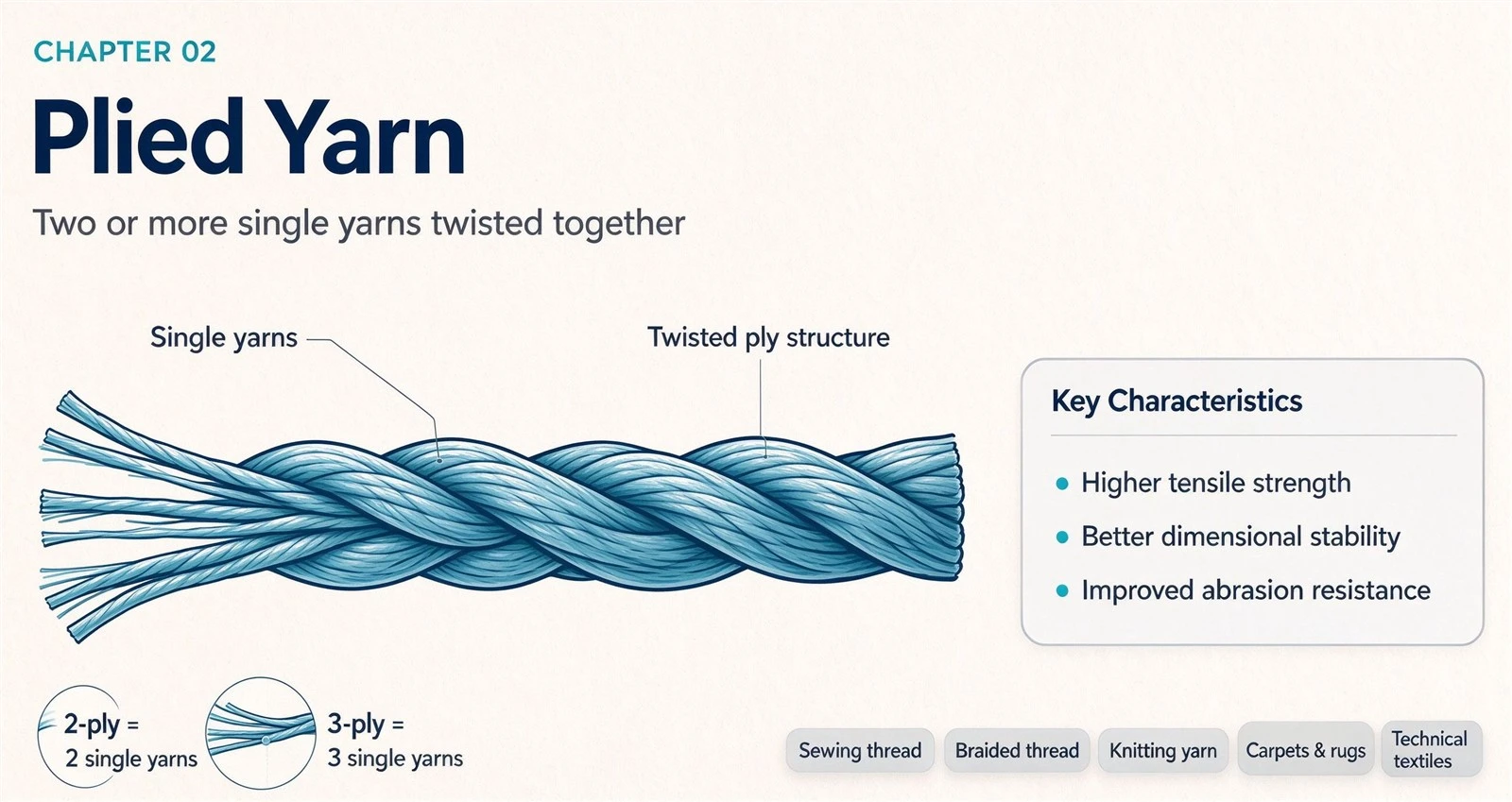
The number of yarns combined determines the ply. For example, two single yarns twisted together form a two-ply yarn, while three single yarns form a three-ply yarn.
Compared with single yarn, plied yarn generally offers better strength, dimensional stability, and resistance to abrasion. The twisting process can also improve the appearance and handling characteristics of the finished yarn.
Common applications of plied yarn
Plied yarn is commonly used for:
The twisting direction and amount of twist can be adjusted according to the intended application. This allows manufacturers to produce yarns with different levels of strength, flexibility, surface texture, and stability.
Monofilament Yarn
Monofilament yarn consists of a single continuous filament rather than a bundle of short fibers spun together.
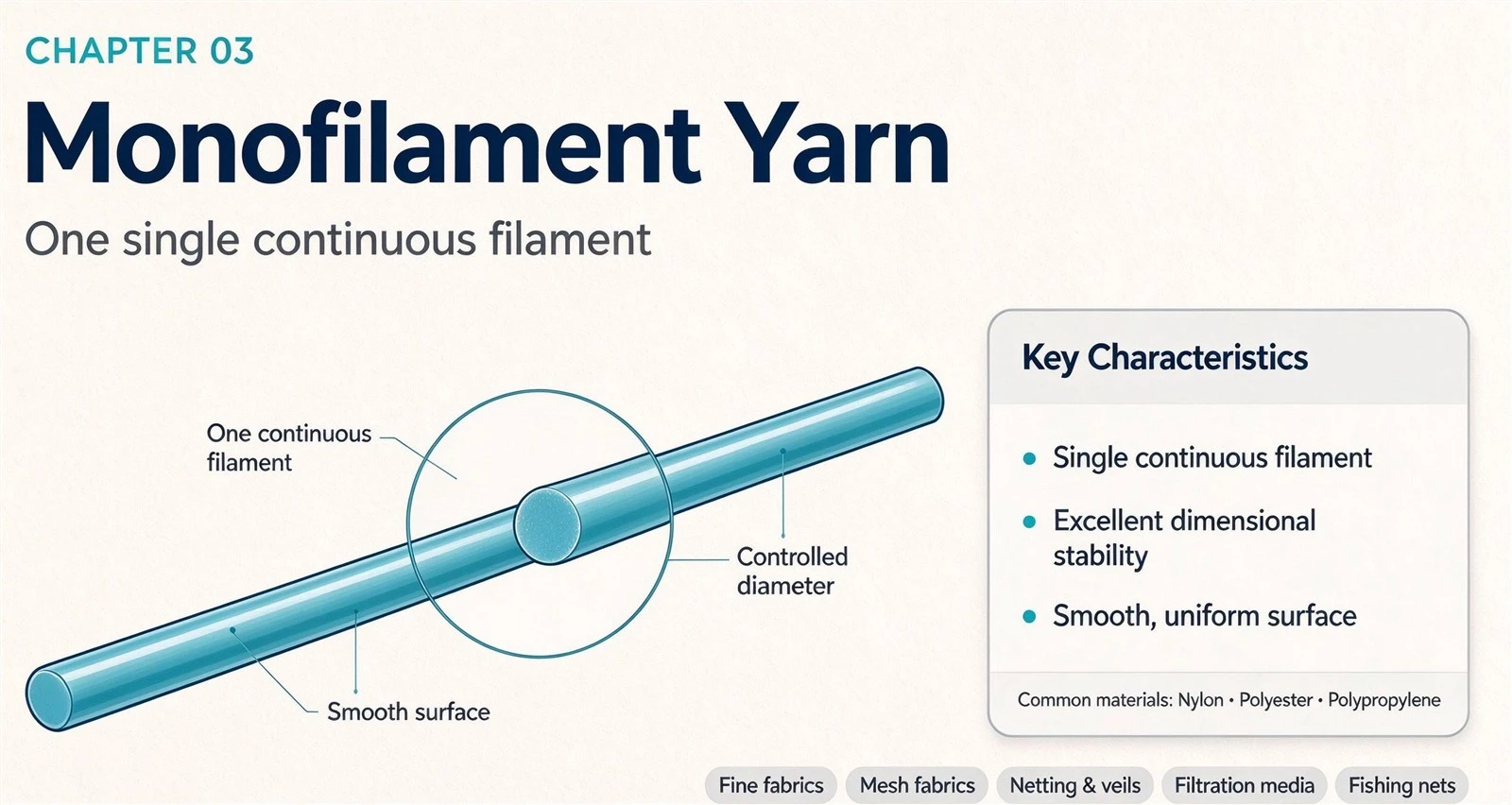
Its diameter is mainly determined by the thickness of the individual filament. Because monofilament yarn has a simple continuous structure, it can offer good dimensional stability and a relatively smooth surface.
Monofilament yarn is commonly produced from synthetic polymers such as nylon, polyester, and polypropylene. Different materials and filament diameters can be selected according to the performance requirements of the final textile product.
Common applications of monofilament yarn
Monofilament yarn is often used in applications such as:
- Fine fabrics
- Mesh fabrics
- Knitted fabrics
- Veils and netting
- Filtration materials
- Fishing nets
- Industrial mesh
The appropriate filament diameter depends on the required strength, flexibility, opening size, and application conditions.
Textured Yarn
Textured yarn is produced by modifying synthetic filament yarn to change its original straight structure. Through mechanical, thermal, or other texturing processes, the filaments are given curls, crimps, loops, or other forms of deformation.
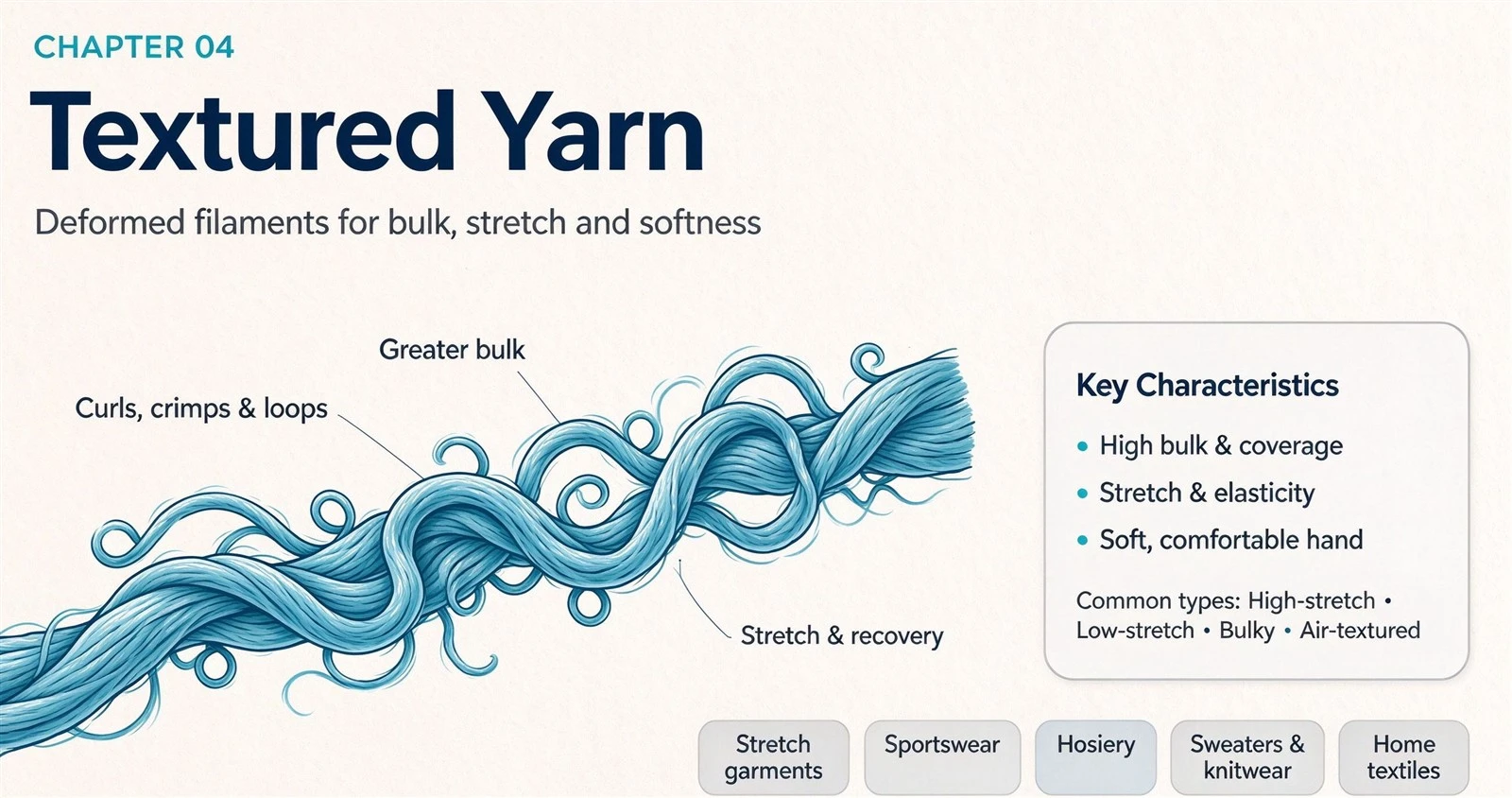
Unlike conventional smooth filament yarn, textured yarn can provide greater bulk, stretch, softness, and surface texture. These characteristics make it particularly useful when manufacturers need a yarn with improved comfort or a specific fabric appearance.
Textured yarn is commonly produced from synthetic fibers such as polyester, nylon, and polypropylene.
Main types of textured yarn
Depending on the texturing process and the required performance, textured yarn can be classified into several types.
1. High-Stretch Yarn
High-stretch textured yarn has a high degree of elasticity and can recover after stretching. It is commonly used in products where flexibility and stretch are important.
Typical applications include:
- Stretch garments
- Sportswear
- Hosiery
- Elastic fabrics
2. Low-Stretch Yarn
Low-stretch textured yarn provides some degree of elasticity while maintaining better dimensional stability than high-stretch yarn.
It is often selected for fabrics that require a balance between comfort, appearance, and shape retention.
3. Bulky Yarn
Bulky yarn is designed to increase yarn volume and create a fuller, softer fabric structure. Its greater bulk can improve warmth, softness, and fabric coverage.
It is commonly used in:
- Sweaters
- Knitted fabrics
- Blankets
- Upholstery textiles
- Home textiles
4. Air-Textured or Network Yarn
Network yarn is produced by forming interconnected filament loops through a texturing process. The resulting structure can improve yarn cohesion and create a more stable, textured surface.
It is used in various textile applications where additional bulk, texture, or yarn stability is required.
Single Yarn vs. Plied Yarn vs. Monofilament vs. Textured Yarn
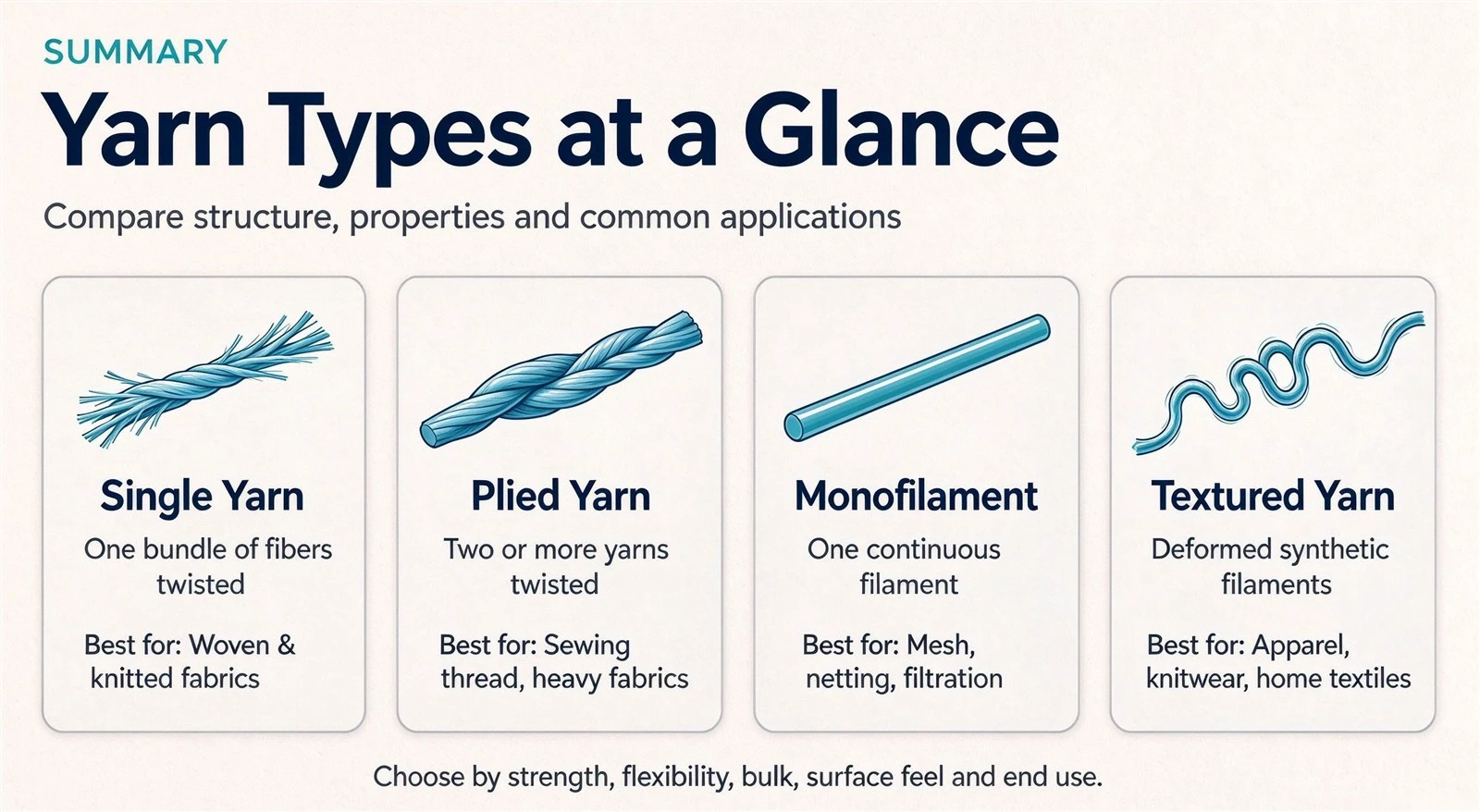
Although these yarn types are all used in textile production, their structures and properties are different.
| Yarn Type | Basic Structure | Main Characteristics | Typical Applications |
|---|---|---|---|
| Single Yarn | One bundle of fibers twisted together | Simple structure, versatile | Woven and knitted fabrics |
| Plied Yarn | Two or more yarns twisted together | Higher strength and stability | Sewing thread, heavy fabrics, technical textiles |
| Monofilament Yarn | One continuous filament | Smooth, stable, controlled diameter | Mesh, netting, filtration |
| Textured Yarn | Deformed synthetic filaments | Bulk, stretch, softness, texture | Apparel, knitwear, home textiles |
Choosing the right yarn structure depends on the performance requirements of the final product. Strength, flexibility, abrasion resistance, bulk, surface appearance, dimensional stability, and processing conditions should all be considered.
How to Choose the Right Yarn Structure
There is no single yarn structure suitable for every textile application. The selection should start with the requirements of the finished product.
1. Consider Strength Requirements
If the application requires higher tensile strength or better resistance to mechanical stress, plied yarn may be more suitable than a comparable single yarn.
01
2. Consider Flexibility and Stretch
For products requiring elasticity or improved flexibility, textured yarn can provide advantages over conventional straight filament yarn.
02
3. Consider Filament Diameter
For mesh, netting, and filtration applications, monofilament yarn can be selected according to the required diameter, opening size, and mechanical performance.
03
4. Consider Surface and Fabric Feel
Textured yarn can add bulk and softness to a fabric, while smooth filament yarn can provide a cleaner and more uniform surface.
04
5. Consider the End Application
The final use should always be considered together with yarn structure. Apparel, home textiles, filtration materials, sewing thread, and industrial fabrics can have very different yarn requirements.
05
Why Yarn Structure Matters in Textile Manufacturing
Yarn structure directly affects how a yarn behaves during weaving, knitting, sewing, and other textile processes. It also influences the performance of the finished fabric.
A suitable yarn structure can help manufacturers achieve the required combination of:
- Tensile strength
- Abrasion resistance
- Flexibility
- Elasticity
- Surface smoothness
- Bulk and coverage
- Dimensional stability
- Processing performance
For this reason, yarn selection is not simply a matter of choosing a fiber material. The structure and manufacturing process of the yarn are equally important.
Yarn Selection for Filtration and Technical Textiles
In technical textile applications, yarn requirements can be different from those of conventional apparel fabrics. Filtration products, for example, may require specific combinations of fiber material, yarn structure, strength, surface characteristics, and processing stability.
For filter yarn used in string wound filter cartridges, the yarn structure can directly affect the density and filtration characteristics of the finished cartridge. Factors such as yarn material, yarn count, twist, and winding structure need to be considered together.
As a manufacturer and supplier of textile materials and filtration-related products, ANDA focuses on developing yarn and filter solutions for different industrial applications. By combining appropriate fiber materials with controlled yarn manufacturing processes, ANDA provides products designed to meet the requirements of different filtration and textile applications.
Conclusion
Single yarn, plied yarn, monofilament yarn, and textured yarn represent four important yarn structures used across the textile industry.
Single yarn offers a simple and versatile structure, while plied yarn provides additional strength and stability. Monofilament yarn is suitable for applications requiring a controlled continuous filament, and textured yarn provides additional bulk, elasticity, and surface texture.
Understanding the differences between these yarn types makes it easier for textile manufacturers and buyers to select the right material for a specific application. The best choice ultimately depends on the required performance, processing method, and end use of the finished textile product.