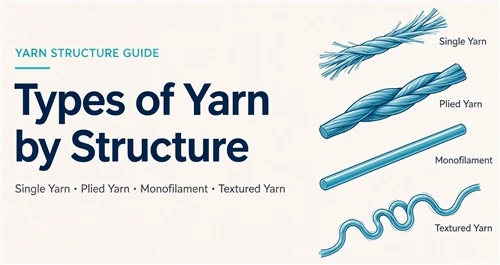
Special yarn, also known as fancy yarn, is designed to create distinctive visual or structural effects in textile products. Unlike conventional yarns, which are mainly produced for uniformity and basic fabric performance, special yarns are developed to add texture, color variation, thickness, shine, softness, or other decorative effects.
These yarns are widely used in woven and knitted fabrics, apparel, home textiles, accessories, and decorative products. Depending on the manufacturing method, special yarn can produce effects ranging from simple color variations to highly textured or three-dimensional surfaces.
For textile manufacturers, understanding the different types of special yarn is important when selecting materials for a particular fabric or end product.
What Is Special Yarn?
Special yarn is a type of yarn produced through special raw materials, yarn structures, spinning methods, or processing techniques to create a specific appearance or performance effect.
It may be made from natural fibers, man-made fibers, recycled materials, or a combination of different fibers. During production, manufacturers can change the yarn's structure, twist, thickness, color, or surface to achieve the desired effect.
Compared with ordinary yarn, special yarn places greater emphasis on the appearance and texture of the finished textile.
Common effects include:
- Uneven or irregular texture
- Thick and thin sections
- Loops and curls
- Knots or slubs
- Metallic or glossy effects
- Color variations
- Hairy or fuzzy surfaces
- Braided or wrapped structures
- Three-dimensional decorative effects

Because of these characteristics, special yarn is often used when a fabric needs more visual interest or a distinctive hand feel.
How Is Special Yarn Made?
There is no single manufacturing process for all special yarns. Different effects require different production methods, and several techniques can also be combined in one yarn.
Depending on the product, manufacturers may use:
- Special fiber combinations
- Different twisting methods
- Core-spun or wrapped structures
- Controlled changes in yarn thickness
- Color blending
- Looping or curling processes
- Braiding or binding
- Special finishing treatments

For example, a yarn can be made by wrapping one yarn around another to create a decorative surface. Another type may combine fibers with different shrinkage characteristics to produce a three-dimensional effect during finishing.
This flexibility is one of the main reasons why the special yarn category contains such a wide variety of products.
Common Types of Special Yarn
Special yarn covers a broad range of products. The exact classification can vary between textile manufacturers and industry standards, but common types include the following.

1. Slub Yarn
Slub yarn has deliberately created thick and thin sections along its length. The irregular structure gives the finished fabric a natural, casual, or textured appearance.
Slub yarn is commonly used in:
The size and frequency of the slubs can be adjusted according to the required fabric appearance.
2. Bouclé Yarn
Bouclé yarn is characterized by small loops that form along the surface of the yarn. These loops give fabrics a soft, textured and sometimes three-dimensional appearance.
It is often used in:
Bouclé yarn is particularly useful when texture is an important part of the fabric design.
3. Chenille Yarn
Chenille yarn has a soft, fuzzy surface created by arranging fibers around a central yarn structure. It is known for its distinctive hand feel and relatively full appearance.
Chenille is widely used in:
Its soft surface makes it particularly suitable for products where comfort and tactile appeal are important.
4. Core-Spun Special Yarn
Core-spun yarn combines a central core with one or more fibers wrapped around it. The core can provide strength or another functional property, while the outer fibers determine much of the yarn's appearance and feel.
Different combinations can be developed for specific applications, such as:
- Stretch fabrics
- Fashion textiles
- Workwear
- Decorative fabrics
- Knitted products
Core-spun construction also provides manufacturers with greater flexibility when combining different fiber characteristics.
5. Wrapped Yarn
Wrapped yarn is produced by wrapping one yarn or filament around another yarn or core. The wrapping can change the appearance, softness, strength, or surface characteristics of the finished yarn.
Depending on the materials used, wrapped yarn can have a smooth, glossy, textured, or decorative appearance.
6. Metallic and Glitter Yarn
Metallic or glitter yarn is designed to create a shiny or reflective appearance. These yarns are often made by incorporating metallic-looking filaments or other reflective materials into the yarn structure.
They are commonly found in:
- Fashion garments
- Party clothing
- Accessories
- Decorative fabrics
- Knitwear
- Embroidery
- Seasonal textiles
Because even a relatively small amount can create a noticeable visual effect, metallic yarn is often combined with conventional yarns rather than used throughout the entire fabric.
Materials Used for Special Yarn

Special yarn is not limited to one type of fiber. Manufacturers can select different materials depending on the required appearance, strength, softness, cost, and end use.
Natural Fibers
Common natural materials include:
- Cotton
- Wool
- Silk
- Linen
- Other plant or animal fibers
Natural fibers are often selected when softness, breathability, warmth, or a natural appearance is important.
Man-Made Fibers
Synthetic and regenerated fibers can provide additional options for special yarn production.
Common choices include:
- Polyester
- Nylon
- Acrylic
- Viscose
- Polypropylene
- Other specialty filaments
These materials can offer advantages such as strength, dimensional stability, color consistency, abrasion resistance, or easier processing.
Blended Materials
Different fibers can also be combined in one yarn. Blending allows manufacturers to balance the properties of multiple materials.
For example, one fiber may contribute softness while another improves strength or dimensional stability.
This is especially useful when the final product needs both a particular appearance and specific performance characteristics.
Where Is Special Yarn Used?
The application range of special yarn is much broader than decorative clothing.

Apparel
Special yarn is widely used in fashion garments where texture and appearance are important.
Typical products include:
- Coats
- Jackets
- Suits
- Shirts
- Dresses
- Sweaters
- Knitwear
Designers can use different yarn structures to create a fabric with a more distinctive surface without relying entirely on printing or additional decoration.
Accessories
Special yarn is also commonly used for:
- Hats
- Scarves
- Gloves
- Ties
- Bags
- Fashion accessories
The decorative effect of the yarn can become an important part of the product's overall design.
Home Textiles
In home textile applications, special yarn can add texture and visual depth to a product.
Typical applications include:
- Blankets
- Throws
- Curtains
- Cushion covers
- Upholstery
- Rugs
- Decorative fabrics
- Bedding
The selection of yarn depends on the required appearance as well as durability and care requirements.
Decorative and Interior Applications
Some special yarns are used in decorative textile products and interior materials where appearance is a major consideration.
They can be incorporated into wall coverings, decorative panels, furnishing fabrics, and other textile-based interior products.
Why Do Textile Manufacturers Use Special Yarn?
The main reason is simple: ordinary yarn cannot always provide the desired fabric effect.
Special yarn gives manufacturers more options when developing a textile.
It can help create:
- A distinctive surface texture
- Greater visual depth
- Different hand feels
- Color variation
- Decorative effects
- Improved product differentiation
- A specific fashion or design style
For product developers, special yarn can therefore be a design tool as well as a textile material.
How to Choose the Right Special Yarn

Choosing a special yarn should start with the requirements of the final product rather than the appearance of the yarn alone.
1. Consider the End Use
A yarn designed for a decorative scarf may not be suitable for upholstery or heavy-use fabrics.
Consider whether the final product requires:
- Softness
- Strength
- Abrasion resistance
- Stretch
- Heat resistance
- Dimensional stability
- Easy care
2. Check the Yarn Structure
The yarn structure directly affects the appearance and performance of the finished fabric.
Pay attention to:
- Yarn count
- Twist
- Core structure
- Thickness variation
- Loop size
- Surface characteristics
- Fiber composition
3. Evaluate Processing Compatibility
Not every special yarn performs the same way during weaving, knitting, dyeing, or finishing.
Before large-scale production, it is important to confirm that the yarn is compatible with the planned textile process.
4. Check Consistency
Special effects may be intentional, but production still needs to remain controlled.
For commercial textile production, manufacturers should pay attention to consistency in:
- Yarn count
- Color
- Twist
- Thickness
- Surface effect
- Strength
Consistent yarn quality helps reduce variations between production batches.
5. Consider the Final Fabric
The most important test is often the finished fabric rather than the yarn itself.
A special yarn that looks attractive on a yarn cone may produce a completely different effect after weaving, knitting, dyeing, washing, or finishing.
For this reason, sample production is recommended before placing a large order.
Special Yarn vs. Conventional Yarn
The key difference is the purpose of the yarn structure.
Conventional yarn is generally designed around requirements such as uniformity, strength, processing efficiency, and consistent fabric performance.
Special yarn places greater emphasis on appearance, texture, structure, and distinctive fabric effects.
This does not mean that special yarn is simply more decorative. Its structure can also influence the hand feel, drape, warmth, bulk, and other characteristics of the finished textile.
The right choice therefore depends on the requirements of the application.
What Should Buyers Ask a Special Yarn Supplier?
For textile buyers and manufacturers, asking the right questions before purchasing can help avoid problems during production.
Important questions include:
- What is the fiber composition?
- What is the yarn count?
- What type of special effect does the yarn provide?
- Is the effect consistent between batches?
- Is the yarn suitable for knitting, weaving, or both?
- What colors and specifications are available?
- Can the yarn be customized?
- What are the minimum order requirements?
- Are samples available?
- What quality-control standards are used during production?
These details are particularly important for buyers developing fabrics for repeated commercial production.
The Role of Special Yarn in Modern Textile Development
Today's textile market places increasing emphasis on product differentiation. Fabric appearance, texture, comfort, and material characteristics can all influence how a textile is perceived.
Special yarn provides manufacturers and designers with another way to develop distinctive products without relying only on fabric printing or post-processing.
At the same time, modern special yarn production is increasingly focused on material efficiency, consistent quality, customized specifications, and application-specific performance.
For yarn manufacturers and textile suppliers, this means that the ability to provide stable quality and flexible customization can be just as important as creating an attractive yarn effect.
Special Yarn from ANDA
As a textile manufacturer, ANDA focuses on the development and production of yarn products for different industrial and textile applications. Its product range includes polypropylene yarn and other yarn-related products used in filtration and textile applications.
For buyers, choosing a suitable yarn is not simply a matter of selecting an attractive appearance. Fiber composition, yarn structure, processing requirements, application conditions, and quality consistency all need to be considered together.
Working with an experienced supplier can make it easier to match yarn specifications with the requirements of the final product.
Final Thoughts
Special yarn, or fancy yarn, gives textile manufacturers a practical way to create fabrics with distinctive textures, structures, colors, and surface effects.
From slub and bouclé yarn to chenille, wrapped yarn, metallic yarn, and customized constructions, the category covers a wide range of possibilities.
Natural fibers, synthetic fibers, and blended materials can all be used depending on the required result.
For buyers, the best special yarn is not necessarily the yarn with the most noticeable effect. The right choice is the one that provides the required appearance, processing performance, consistency, and value for the intended application.
Understanding the yarn structure and testing samples before mass production can help manufacturers achieve more predictable results and develop textile products that meet both design and performance requirements.