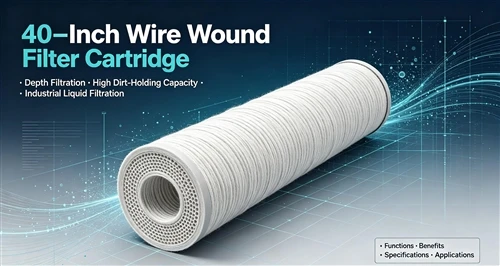
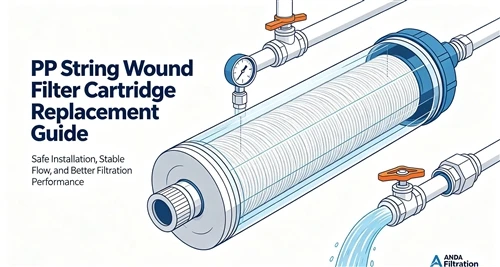
In filtration applications, the performance of a finished filter cartridge does not depend only on the cartridge design. The yarn used to make the filter media also plays an important role.
For string wound filter cartridges, factors such as fiber material, yarn structure, yarn count, twist, tensile strength, and winding consistency can influence filtration accuracy, flow resistance, dirt-holding capacity, and service life.
This is why spinning technology matters.
A well-designed spinning process can produce yarn with a more consistent structure and predictable performance, giving filter cartridge manufacturers better control over the final filtration result.
What Is Spinning Technology?
Spinning is the process used to convert fibers or polymer materials into yarn or continuous filaments with a controlled structure.
Different spinning methods produce different yarn characteristics. Depending on the raw material and intended application, manufacturers may use ring spinning, friction spinning, melt spinning, air spinning, or other specialized processes.
For synthetic materials such as polypropylene (PP), the production process commonly starts with polymer material that is melted and formed into fibers or filaments. The material is then cooled, drawn, oriented, and wound. Further processing can be used to create the yarn structure required for a specific application.
In filtration, the objective is not simply to produce strong yarn. The yarn must also have a suitable combination of strength, openness, uniformity, and permeability.
These characteristics determine how the yarn behaves when it is wound around a filter core.
Why Yarn Structure Matters in Filtration
A string wound filter cartridge works as a depth filtration medium. Unlike a simple screen that mainly captures particles at the surface, a wound cartridge uses the spaces between the yarn layers to retain contaminants at different depths.
The way the yarn is manufactured directly affects these spaces.
For example, yarn with a more open structure can provide greater pathways for liquid to pass through, while a more compact structure can increase resistance to flow. The amount of twist is another important factor because excessive twist can make the yarn more compact and change its effective porosity.

Research into yarn for wound filtration has also shown that spinning method and yarn structure can affect both filtration characteristics and pressure drop. This makes spinning technology an important part of filter media development rather than simply a textile production step.
Key Factors in Spinning for Filter Yarn
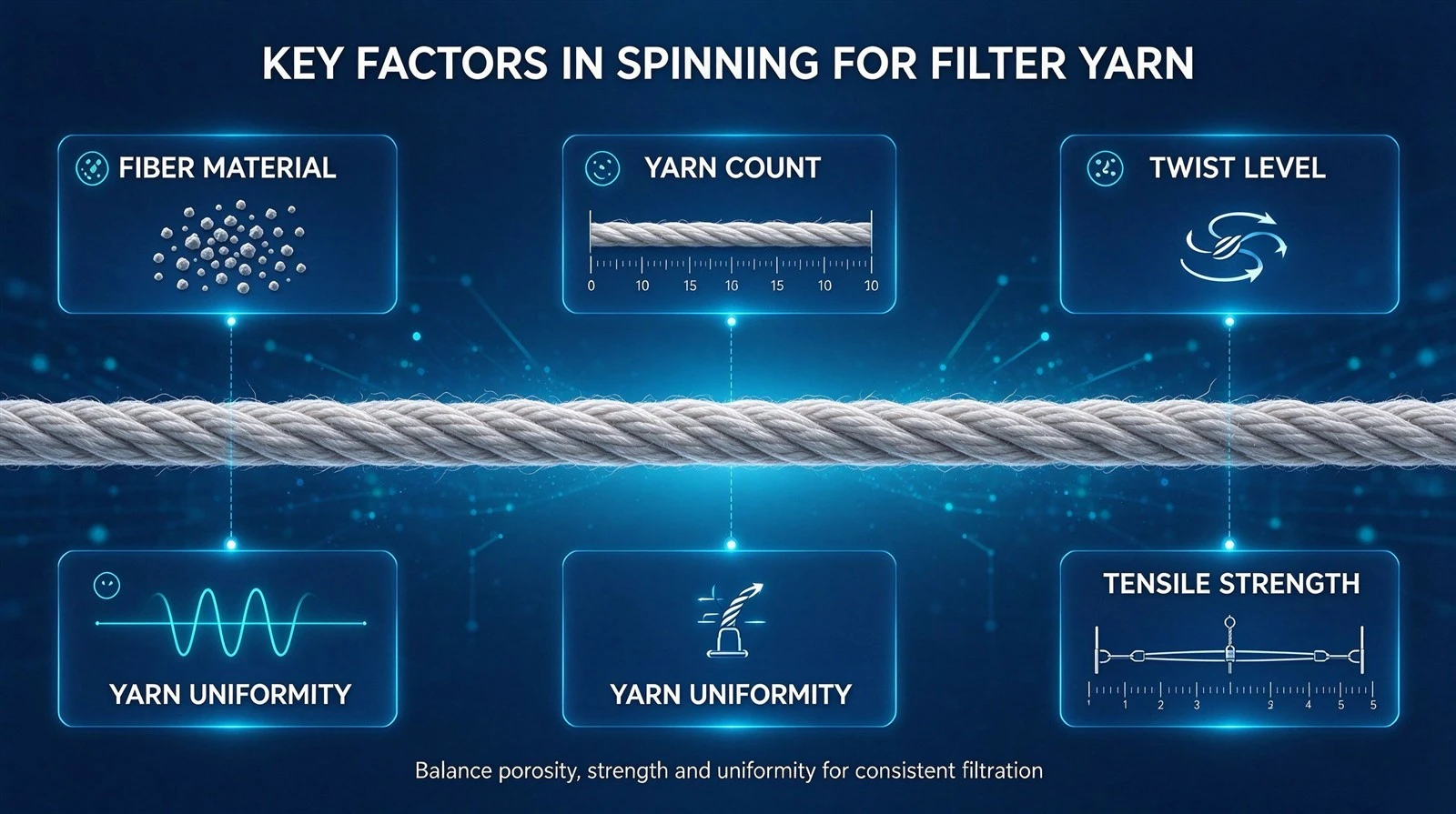
1. Fiber Material
The first consideration is the raw material.
Polypropylene is widely used for filter yarn because it combines low moisture absorption, good chemical resistance, low density, and suitable mechanical properties for many liquid filtration applications.
For industrial filtration, the choice of polymer can affect chemical compatibility, temperature resistance, mechanical strength, and the long-term stability of the finished cartridge.
For this reason, filter cartridge manufacturers need to consider both the spinning process and the properties of the selected fiber.
01
2. Yarn Count and Thickness
Yarn count affects the amount of material used in a given length of yarn and influences the physical structure of the wound filter.
A finer or heavier yarn can produce different winding densities and filtration characteristics. The appropriate specification depends on the cartridge design, target micron rating, flow requirement, and application.
For filter cartridge manufacturers, maintaining consistent yarn count from batch to batch is particularly important. Significant variation can make it difficult to maintain consistent cartridge performance during production.
02
3. Twist Level
Twist is another critical factor in yarn production.
Twisting binds fibers together and gives the yarn mechanical stability. However, too much twist can make the yarn more compact and reduce the open spaces available for fluid flow.
In a wound filter, this can influence pressure drop and particle retention.
The relationship is not simply "more twist is better" or "less twist is better." The appropriate twist level depends on the yarn material, spinning method, cartridge construction, and intended filtration performance.
This is why yarn specifications should be developed around the final application rather than selected only according to tensile strength.
03
4. Yarn Uniformity
Uniformity is especially important when yarn is used for automated filter cartridge winding.
If yarn diameter, weight, strength, or surface structure varies significantly along its length, the winding density can become inconsistent. This may result in variations in filtration performance between different sections of the same cartridge or between production batches.
Consistent yarn helps manufacturers maintain a more predictable winding pattern and reduce production interruptions caused by yarn breakage.
04
5. Tensile Strength
Filter yarn needs sufficient mechanical strength to withstand the winding process.
During cartridge production, the yarn is continuously pulled and wound under controlled tension. Weak or inconsistent yarn can break during production, reducing efficiency and increasing material waste.
At the same time, strength should not be considered separately from filtration structure. A yarn designed only for maximum strength may not necessarily provide the desired porosity or flow characteristics.
The goal is to achieve a balanced yarn structure that works reliably during both manufacturing and filtration.
05
Common Spinning Methods Used for Technical Yarn
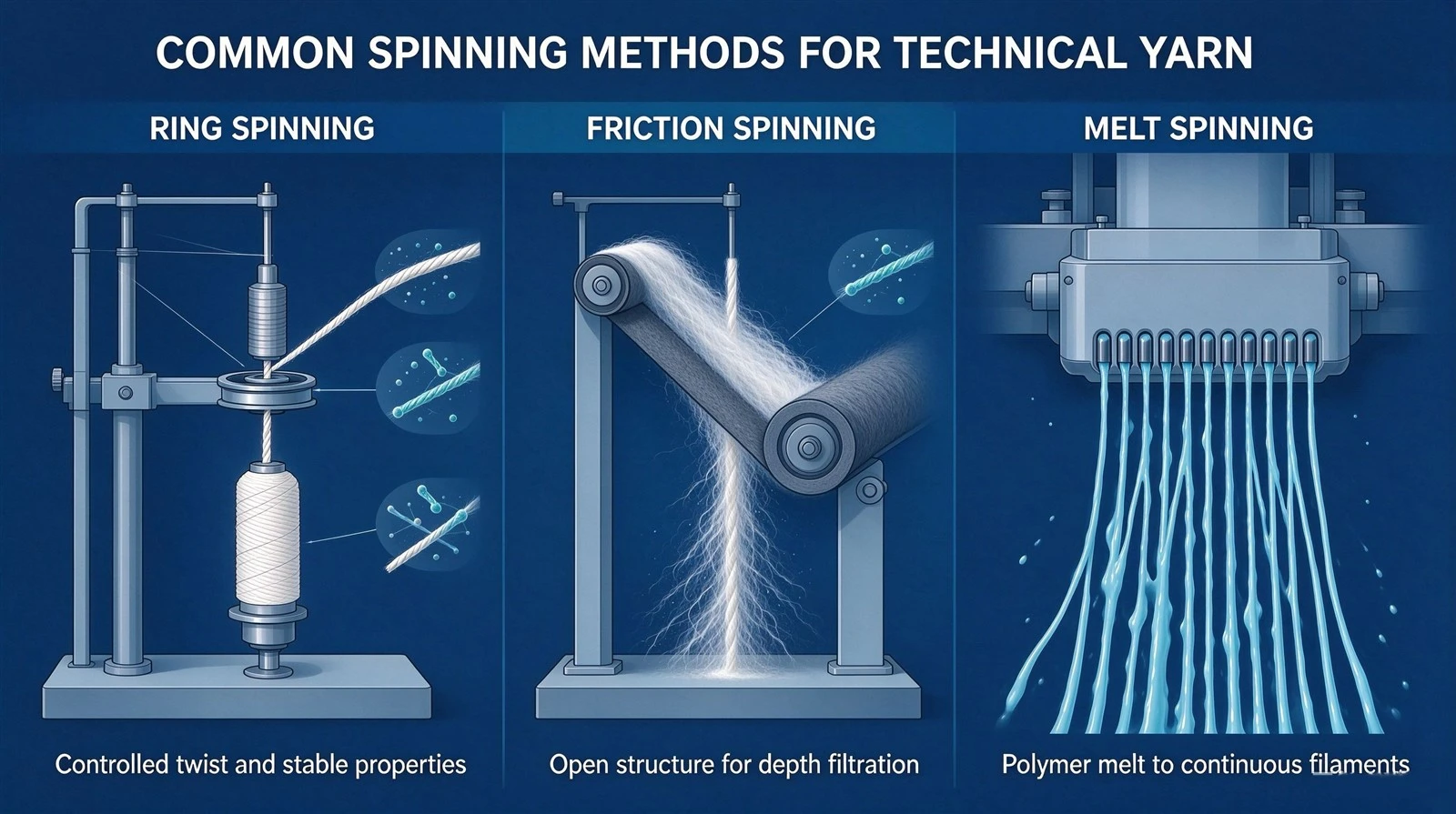
Different spinning technologies are suitable for different yarn structures and applications.
Ring Spinning
Ring spinning is a well-established yarn manufacturing technology that provides good control over yarn structure and mechanical properties.
For filtration applications, ring-spun yarn can be engineered with specific characteristics such as controlled yarn count, strength, and twist.
It is particularly useful when manufacturers require stable yarn properties and consistent production quality.
Friction Spinning
Friction spinning, including DREF-type processes, is also used for specialized filtration yarns.
Its yarn structure can be relatively open, which may be useful when designing filtration media that require a balance between particle retention and fluid flow.
The choice between friction spinning and other methods should be based on the required filtration performance rather than the spinning technology alone.
Melt Spinning
Melt spinning is widely used for synthetic polymers such as polypropylene.
The polymer is heated until it becomes molten and then extruded through a spinneret to form filaments. The filaments are cooled and subsequently drawn and wound.
Because polypropylene can be processed through melt spinning, the technology is important for producing synthetic fibers and yarns used in filtration and other technical applications.
In industrial polymer processing, filtration of the polymer melt itself can also be important because contaminants or gels can affect the quality of the resulting yarn. Technical yarn production therefore involves control not only of spinning conditions but also of the cleanliness and stability of the polymer melt.
From Spinning to String Wound Filter Cartridge
Producing suitable yarn is only one part of the process.
After spinning, the yarn is wound around a core to form the filtration layer. By adjusting winding tension, pattern, density, and the number of layers, manufacturers can create different filtration structures.
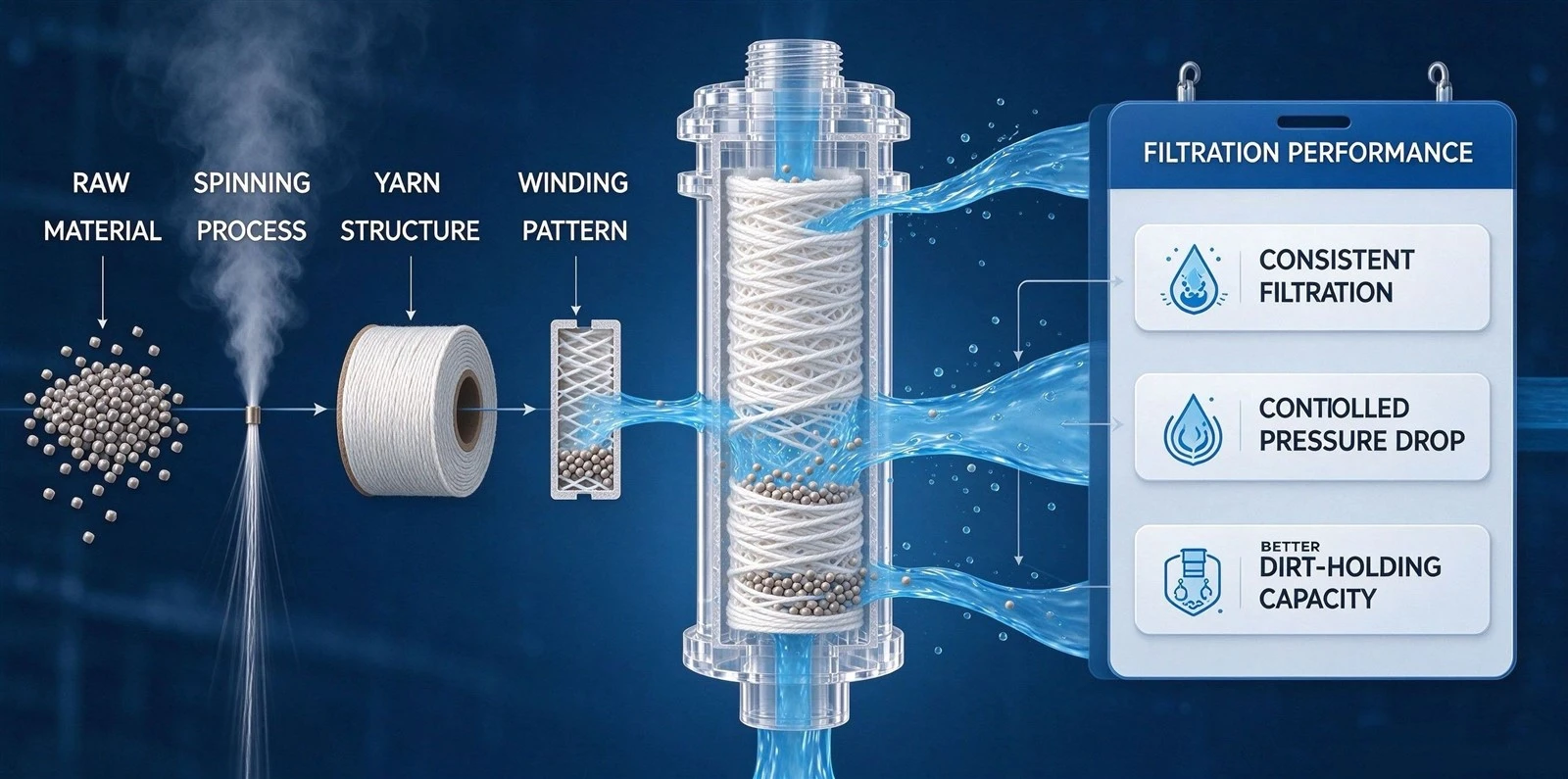
A typical wound filter can therefore be viewed as the result of several interconnected factors:
Raw material → Spinning process → Yarn structure → Winding pattern → Filter density → Filtration performance
Changing one of these factors can influence the final cartridge.
For example, using the same polypropylene material with different yarn structures or winding conditions may produce cartridges with different flow resistance and particle retention characteristics.
This is why experienced filter manufacturers usually evaluate yarn and cartridge design together.
How Spinning Technology Can Affect Filter Performance
A well-controlled spinning process can contribute to several important characteristics of wound filter media.
More Consistent Filtration
Uniform yarn helps create a more consistent filtration structure during winding. This can make cartridge performance more predictable from one production batch to another.
Controlled Pressure Drop
The internal structure of the yarn and the resulting pore pathways influence how easily liquid passes through the filter.
An overly dense structure can increase flow resistance, while an excessively open structure may reduce particle retention. Proper yarn and winding design are therefore essential for balancing these factors.
Better Dirt-Holding Capacity
Depth filtration relies on the three-dimensional structure of the wound media to capture suspended particles.
A suitable yarn structure can create multiple pathways and retention points through the depth of the cartridge, allowing contaminants to be distributed throughout the filtration media rather than accumulating only on the surface.
Improved Manufacturing Efficiency
Stable yarn strength and uniformity can reduce yarn breaks during automated winding.
For cartridge manufacturers producing large volumes, even small improvements in yarn consistency can translate into fewer production interruptions and less material waste.
Why Polypropylene Is Widely Used for Filter Yarn
Polypropylene is a practical choice for many filtration applications because of its combination of chemical resistance, low moisture absorption, lightweight construction, and relatively stable performance in wet environments.
It can be used in applications such as:
Industrial water treatment
Process water filtration
RO system pre-filtration
Chemical liquid filtration
Food and beverage processing
Pharmaceutical pre-filtration
Electronics and process water systems
Oil and lubricant filtration
The exact suitability of polypropylene depends on the operating temperature, chemical environment, pressure, required filtration rating, and regulatory requirements of the application.
ANDA's Approach to Filter Yarn Manufacturing
For ANDA, spinning technology is closely connected with the quality of the finished filtration product.
ANDA develops polypropylene filter yarn specifically for string wound filter cartridge manufacturing. Its product range includes polypropylene yarn designed for different cartridge structures and production requirements.
ANDA's 100% polypropylene filter yarn, for example, uses virgin polypropylene and is available in specifications such as 0.5 g/m, 0.6 g/m, 0.8 g/m, 0.9 g/m, and 1.0 g/m. The company's product range also includes different yarn structures and processing options for filtration applications.
For applications requiring controlled yarn performance, ANDA focuses on factors including yarn uniformity, tensile strength, winding behavior, and material consistency.
This approach allows filter cartridge manufacturers to select yarn according to the requirements of their own winding equipment and finished filter design rather than relying on a one-size-fits-all specification.
Choosing the Right Spinning Technology for Filter Yarn
When sourcing yarn for filter cartridge production, buyers should look beyond the material name.
A practical evaluation should include:
- Raw material: Is the yarn made from the required polymer and grade?
- Yarn structure: Is the structure suitable for the intended filtration process?
- Yarn count: Does the yarn match the cartridge design and winding equipment?
- Strength: Can the yarn withstand continuous winding without excessive breakage?
- Uniformity: Are diameter, weight, and strength consistent between batches?
- Twist: Is the twist level appropriate for the required permeability and mechanical stability?
- Chemical compatibility: Can the yarn withstand the fluids and operating conditions involved?
- Supply consistency: Can the supplier maintain stable quality for repeat orders?
These questions are often more useful than comparing suppliers based solely on price.
The Bottom Line
Spinning technology is an important link between raw polymer materials and finished filtration performance.
For string wound filter cartridges, yarn is not simply a structural material. Its composition and physical structure influence the way the finished filter handles fluid flow, particle retention, pressure drop, and mechanical stress.
As filtration systems become more application-specific, manufacturers need yarn with predictable properties rather than simply a low-cost material.
For filter cartridge producers looking for polypropylene filter yarn, spun yarn for water filters, or customized yarn solutions, ANDA can provide different yarn specifications and materials according to cartridge design and production requirements.
The right yarn is the starting point for a more consistent wound filter.