Blended yarn is made by combining two or more different types of fibers to create a yarn with a balanced combination of properties. Instead of relying on the characteristics of a single fiber, manufacturers can combine fibers to improve strength, softness, durability, moisture management, appearance, or cost efficiency.
Common examples include polyester/cotton yarn, wool/polyester yarn, wool/acrylic yarn, polyester/viscose yarn, and polyester/cotton/viscose blends.
Blending is widely used in apparel, home textiles, industrial textiles, and other textile applications because different fibers can complement each other.
The final performance of the yarn depends not only on the fibers selected, but also on the blend ratio, fiber quality, yarn count, and spinning process.
What Is Blended Yarn?
A blended yarn generally contains two or more different fiber types that are combined to form one yarn structure.
For example, a polyester/cotton yarn combines synthetic polyester with natural cotton. Polyester can contribute strength, durability, dimensional stability, and resistance to wrinkles, while cotton contributes softness, moisture absorption, and a more natural hand feel.
The purpose of blending is not simply to put different fibers together. It is to create a yarn whose overall performance is better suited to a particular end use.

This makes fiber selection and blend ratio important decisions during yarn development.
Why Are Different Fibers Blended?
Every fiber has its own advantages and limitations.
Cotton is valued for its softness and moisture absorption. Polyester is known for its strength, durability, dimensional stability, and easy-care properties.
Wool offers warmth, resilience, and a distinctive natural feel. Viscose can provide softness, drape, and a smooth appearance.
When these fibers are combined, manufacturers can develop yarns with a more balanced set of properties.
For example:
- Cotton + polyester can combine comfort with durability and easier care.
- Wool + polyester can improve durability and dimensional stability while retaining some of wool's warmth and natural feel.
- Polyester + viscose can balance durability with softness and drape.
- Wool + acrylic can provide warmth and a wool-like appearance with different cost and care characteristics.
The right combination depends on the intended application rather than a single "best" fiber.
Common Types of Blended Yarn

1. Polyester/Cotton Blended Yarn
Polyester/cotton, often called poly-cotton, is one of the most widely used fiber combinations.
The blend can provide a practical balance between comfort and durability. Polyester helps improve strength, abrasion resistance, wrinkle resistance, and dimensional stability, while cotton contributes softness and moisture absorption.
Different blend ratios can be selected according to the requirements of the finished textile.
Typical applications include:
- Workwear
- Uniforms
- Shirts
- T-shirts
- Home textiles
- Bedding
- Industrial fabrics
The important point is that changing the polyester-to-cotton ratio can change the feel and performance of the final yarn.
2. Wool/Polyester Blended Yarn
Wool/polyester yarn combines a natural animal fiber with a synthetic fiber.
Wool provides warmth, resilience, and a characteristic natural appearance, while polyester can contribute strength, durability, and improved dimensional stability.
These blends are commonly used for apparel and other textiles where comfort and durability are both important.
3. Wool/Acrylic or Wool/Nitrile Blended Yarn
Wool can also be blended with acrylic or other synthetic fibers to create yarns with different combinations of warmth, appearance, durability, and cost.
These blends are often considered when manufacturers want some of the visual and tactile characteristics associated with wool while adjusting the performance or economics of the finished textile.
4. Polyester/Viscose Blended Yarn
Polyester/viscose is another common combination.
Polyester contributes strength and durability, while viscose can provide softness, drape, and a smooth hand feel.
This type of blend is frequently used in clothing and other textile products where appearance and comfort are important.
5. Three-Fiber Blended Yarn
Not all blended yarns contain only two fibers.
Manufacturers can combine three or more fibers when a more specific performance balance is required.
Examples include:
- Polyester/cotton/viscose
- Polyester/wool/acrylic
- Nylon/wool/viscose
Three-fiber blends provide more flexibility in yarn development because each component can contribute a different characteristic. However, they also require more careful control of fiber properties and blend ratios. Different three-fiber combinations are used across apparel, home textiles, and other textile applications.
Blended Yarn vs. Twisted or Plied Yarn
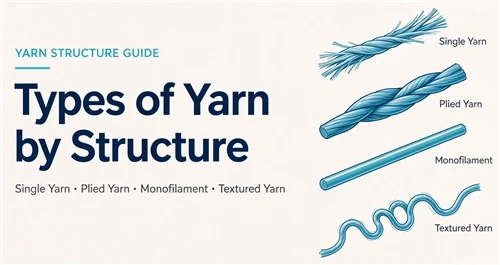
These terms are sometimes used interchangeably in general descriptions, but they describe different yarn constructions.
A blended yarn normally refers to different fibers being combined during the fiber preparation and spinning process. The different fibers are distributed within the yarn rather than simply placing two finished yarns next to each other.
A plied or twisted yarn, on the other hand, is made by twisting two or more yarns together. The individual yarns may be made from the same fiber or from different fibers.

For example:
Polyester/cotton blended yarn → Polyester and cotton fibers are mixed and spun together.
Cotton yarn + polyester yarn twisted together → Two separately produced yarns are combined through twisting.
These constructions can look similar in some applications, but their internal structure and manufacturing process are different.
This distinction is important when specifying yarn for production because fiber blending, yarn plying, and yarn twisting can produce different results in terms of appearance, strength, handle, and fabric performance.
How Is Blended Yarn Made?
The exact manufacturing process varies according to the fiber types and spinning system, but a simplified process can be described as follows:
Fiber selection → Fiber opening and preparation → Blending → Carding/drawing → Spinning → Winding → Inspection
The fibers must be properly prepared before they are blended. Fiber length, fineness, strength, moisture characteristics, and other physical properties can affect how well different fibers work together.
During blending, the goal is to achieve a relatively uniform distribution of the different fibers throughout the yarn.
The mixture is then processed through the appropriate spinning system to produce the required yarn count and structure.
The quality of blending is important because uneven fiber distribution can result in variations in yarn appearance and performance.
Why Does Blend Ratio Matter?
The blend ratio describes the proportion of each fiber in the yarn.
For example:
65% polyester / 35% cotton:means that polyester represents 65% of the fiber content by weight, while cotton represents 35%.
A different ratio, such as 50% polyester / 50% cotton, can produce a different balance of properties.
There is no universal blend ratio that works for every application. The appropriate ratio depends on factors such as:
- Required strength
- Desired softness
- Moisture absorption
- Abrasion resistance
- Appearance
- Shrinkage requirements
- Dyeing requirements
- End-use conditions
- Target production cost
For this reason, buyers should evaluate the complete yarn specification rather than selecting a blended yarn based only on the fiber names.
What Should Buyers Check When Purchasing Blended Yarn?

For textile manufacturers, fabric mills, wholesalers, and sourcing teams, fiber composition is only the starting point.
Before placing an order, it is useful to confirm several technical details.
1. Fiber Composition
Confirm exactly which fibers are included and their percentages.
A specification such as polyester/cotton is not enough by itself. The actual ratio can significantly affect yarn performance.
2. Yarn Count
Yarn count determines the fineness or coarseness of the yarn.
The appropriate count depends on the intended application, fabric construction, and spinning system.
3. Spinning Method
Ring spinning, rotor spinning, and other spinning systems can produce different yarn characteristics.
The spinning method should therefore be considered together with the fiber blend.
4. Fiber Quality
The quality and consistency of each component fiber can affect the final yarn.
Important factors may include fiber length, fineness, strength, cleanliness, and uniformity.
5. Yarn Strength and Evenness
For weaving and knitting applications, consistent yarn quality is important.
Buyers may need to evaluate tensile strength, elongation, yarn evenness, hairiness, and other quality indicators according to the application.
6. Intended Application
The same fiber combination can be produced for very different markets.
A yarn intended for clothing may require a different balance of softness and appearance than yarn designed for industrial or filtration applications.
Therefore, suppliers should understand the final application before recommending a specification.
Blended Yarn in Modern Textile Manufacturing
Blending remains an important part of modern yarn development because textile manufacturers increasingly need to balance performance, comfort, appearance, availability, and cost.
Instead of asking which fiber is "better," a more useful question is:
Which combination of fibers is best for the final product?
This approach gives manufacturers greater flexibility when developing yarns for specific applications.
It also allows fiber properties to be adjusted through different blend ratios and spinning technologies.
For example, a manufacturer may increase the proportion of a durable synthetic fiber when abrasion resistance is important, or increase the proportion of a natural or regenerated fiber when softness and comfort are higher priorities.
Choosing the Right Blended Yarn Supplier
For buyers, consistent quality is just as important as the fiber composition listed on a specification sheet.
A reliable supplier should be able to provide clear information about:
- Fiber composition
- Blend ratio
- Yarn count
- Spinning method
- Yarn strength
- Yarn evenness
- Available specifications
- Quality standards
- Packaging
- Production capacity
- Customization options
For long-term sourcing, consistency between batches is particularly important. Small variations in fiber composition or yarn characteristics can affect downstream weaving, knitting, dyeing, and finishing processes.
ANDA's Approach to Yarn Supply
As a textile yarn manufacturer and supplier, ANDA focuses on providing yarn products for different industrial and textile applications.
For buyers looking for polypropylene yarn and other customized yarn solutions, the key is not simply finding a yarn with the right material name. The yarn should also match the required application, specifications, processing conditions, and final product performance.
ANDA can work with customers to evaluate yarn specifications according to their application requirements, helping buyers select a suitable fiber type, yarn structure, and specification for production.
This application-focused approach is particularly important when yarn is used as a raw material for further processing, where consistency and compatibility with downstream production can directly affect the final product.
Final Thoughts
Blended yarn is essentially about combining the strengths of different fibers.
Whether it is polyester/cotton, wool/polyester, polyester/viscose, or a more complex three-fiber combination, the objective is to achieve a practical balance of properties that a single fiber may not provide on its own.
For buyers, understanding the difference between fiber blending and yarn twisting, checking the blend ratio, and evaluating the complete yarn specification are important steps toward choosing the right product.
A well-designed blended yarn is not simply a mixture of fibers. It is a carefully engineered yarn developed around the performance requirements of the finished textile.
Keywords: blended yarn, blended fiber yarn, polyester cotton blended yarn, blended yarn manufacturer, blended yarn supplier, textile yarn, mixed fiber yarn