A quiet shift is reshaping purchasing strategies across the water treatment sector in 2026.
Filter cartridge procurement once centered solely on unit pricing, filtration precision and lead times. Today, an increasing number of operators have added a mandatory line item to every RFQ: What is this product's carbon footprint, and can it be recycled post-use?
This shift is far from a niche sustainability initiative-it signals an industry-wide paradigm shift.
ESG Is Redefining Water Treatment Purchasing Decisions
Consider key market benchmarks:
The global water treatment and filtration solutions market is projected to reach USD 346.12 billion in 2026, with growth forecast to hit USD 572.83 billion by 2034 at a compound annual growth rate (CAGR) of 6.5% to 10%. Parallel expansion is underway for water treatment equipment, whose 2026 market valuation is estimated between USD 76.41 billion.
While market expansion continues, the core growth drivers have fundamentally transformed.
Driven by national dual carbon targets and circular economy policies, the water treatment industry is shifting its focus from end-of-pipe remediation to full-lifecycle compliance management. Industry-wide operational guidelines now emphasize science-based pollution control, prioritizing source reduction while coordinating carbon and pollutant abatement efforts across multiple contaminant streams. This means every procurement decision for water treatment infrastructure is no longer merely a technical selection-it directly factors into corporate ESG performance metrics.
Meanwhile, regulatory frameworks mandating green procurement are rapidly maturing. China's 2024–2025 Energy Conservation and Carbon Reduction Action Plan directs enterprises to establish robust green supply chain management protocols. The 2025 Guidelines for Green Low-Carbon Supply Chain Development for Central State-Owned Enterprises issued by SASAC requires state-owned conglomerates to embed sustainability across every supply chain stage. A national mandate to build 100 green, low-carbon benchmark wastewater treatment plants by the end of 2025 has turned environmental commitments from corporate buzzwords into enforceable operational KPIs.
For water treatment operators, ESG reporting is no longer a one-off slide deck tucked into annual reports-it imposes tangible, binding requirements on every purchasing checklist.
Filter Cartridges: The Overlooked Blind Spot in ESG Performance
Filter cartridges are widely categorized as disposable consumables within water treatment systems: replace once saturated, discard immediately after service. This throwaway model has created a critical gap in corporate ESG tracking.
A mid-sized water treatment facility may cycle through thousands of cartridges annually. When sent directly to landfills, these discarded plastic cartridges occupy valuable landfill space and take hundreds of years to fully decompose in natural environments. More frequent replacements and shorter service lifespans directly inflate an operation's overall carbon footprint and solid waste output.
Market data underscores this emerging priority: the global market for eco-designed filter cartridges (including recyclable filter media) is valued at USD 192.2 million in 2026, projected to grow to USD 371.3 million by 2036 at a 6.8% CAGR. Water treatment represents its largest end-use sector, accounting for a projected 38% of total market share by 2036. Industrial plant operators and water utilities are expanding their filter system evaluation criteria beyond contaminant removal efficiency to encompass lifecycle waste reduction, energy performance and compatibility with existing filter housings.
Simply put, eco-friendly filter design has evolved from a competitive differentiator to a non-negotiable procurement prerequisite.
Why PP Filter Cartridges Stand Out for Sustainable Sourcing
Among all filter media options, polypropylene (PP) cartridges have emerged as the gold standard for green procurement, thanks to four core inherent advantages:
1.Unmatched recyclability
Polypropylene is widely recognized as a safe, readily recyclable polymer. Spent PP cartridges enter dedicated recycling streams, where they undergo shredding, washing and sorting before being remanufactured into new filter cartridges or other plastic finished goods. This closed-loop process drastically cuts raw material depletion and plastic pollution. Up to 99% of a standard PP cartridge's composition can be recovered for secondary manufacturing.
2.Extended service life via gradient depth filtration
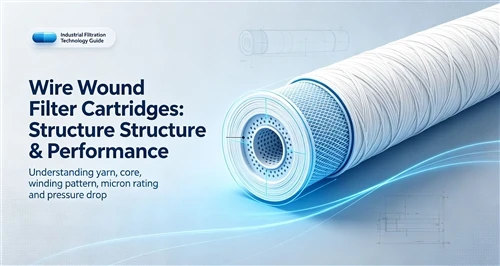
Wound PP cartridges are crafted by winding precision-spun textile fibers around porous core supports to form a honeycomb gradient structure-looser filtration layers on the exterior, denser layers toward the center. This design delivers exceptional dirt-holding capacity, high flow rates and drastically longer service cycles. Longer lifespans translate to fewer cartridge replacements, less waste generation and a smaller overall carbon footprint.
3.Low-impact manufacturing with zero chemical binders
PP cartridges are formed entirely through physical winding processes, with no adhesive chemicals used during production. This eliminates hazardous chemical emissions at the manufacturing stage and prevents harmful leaching into treated water during operational use.
4.Food-contact safe per global standards
PP complies with FDA regulations for food contact materials, featuring non-toxic, odor-free construction. This dual benefit of environmental sustainability and uncompromised safety makes it ideal for potable water treatment and food & beverage processing facilities with strict hygiene mandates.
ANDA Filter: End-to-End Green Manufacturing From Filter Yarn to Finished Cartridges
Amid rising demand for sustainable filtration components, Zibo Anda Textile Co., Ltd. (ANDA Filter) has established itself as an industry frontrunner.
As an integrated manufacturer specializing in custom filter yarn and wound filter cartridge R&D, production and distribution, ANDA operates a full suite of computer-automated production and precision testing equipment, with every manufacturing stage managed via microprocessor-controlled workflows.
ANDA's flagship PP filter yarn and wound cartridges check every box for green procurement compliance:
1.100% monolithic polypropylene construction for streamlined recycling
With zero composite material layers or adhesive additives, ANDA's all-PP cartridges eliminate costly, labor-intensive material separation during post-service recycling.
2.Gradient depth design for superior dirt holding and extended service cycles
The proprietary outer-loose, inner-dense honeycomb winding minimizes replacement frequency, slashing waste volumes and operational carbon emissions over the facility's lifecycle.
3.FDA food-contact certification for cross-industry safety compliance
ANDA's PP yarn and cartridges meet FDA food contact requirements, suiting high-sensitivity applications including municipal drinking water and food/beverage production lines.
4.Full vertical quality control for predictable replacement cycles
By overseeing every production stage from raw yarn extrusion to finished cartridge assembly, ANDA delivers consistent, predictable product lifespans that simplify long-term waste planning and ESG forecasting for clients.
ANDA's product portfolio serves domestic Chinese demand alongside global export markets, with consistent performance and eco-friendly credentials validated through years of international field deployment.


The New Procurement Mindset: Purchasing Filter Cartridges Equals Purchasing ESG Performance
2026 marks a fundamental shift in water treatment purchasing logic.
Procurement teams once only asked: What is the unit cost of this cartridge?
Today, sourcing leaders prioritize three critical follow-up questions: How long will this cartridge remain operational? What recycling pathways exist for spent units? What is the carbon output associated with its manufacturing?
Recyclable PP cartridges deliver value far beyond cutting filtration operational costs-they mitigate ESG compliance risks and boost corporate green procurement scoring. For businesses subject to mandatory ESG disclosure frameworks, specifying recyclable filter media is not merely an environmental choice, but a regulatory compliance necessity.
Market data confirms accelerating demand for eco-designed filtration products, tracking a steady 6.8% annual growth rate. Water treatment facilities are ramping up pre-filtration investments to extend the service life of downstream membrane and activated carbon systems. This signals that market uptake for recyclable PP cartridges is still in its early growth phase.
For water treatment procurement stakeholders, now is the time to formalize cartridge recyclability as a core vendor evaluation metric. Manufacturers like ANDA Filter leverage end-to-end sustainable production capabilities to deliver tangible support for clients working to hit their 2026 ESG milestones.
The next time you evaluate filter cartridge suppliers, pose one pivotal question: Where does this cartridge go once it reaches end of service?
The answer could directly shape your company's annual ESG rating.
About Zibo Anda Textile Co., Ltd.
Zibo Anda Textile Co., Ltd. is an integrated developer, manufacturer and supplier of specialty filter yarn and wound filter cartridges. Its product range encompasses PP filter yarn, absorbent cotton filter yarn and wound cartridges in custom sizes and precision grades. The firm runs fully automated computer-controlled production lines backed by rigorous multi-stage quality assurance protocols. All core PP products meet FDA food contact standards, feature fully recyclable single-polymer construction, and are distributed widely across domestic and international markets. For detailed product specifications or customized green procurement consultation, visit ANDA Filter's official website or connect with the global sales team.