When engineers and buyers evaluate a string wound filter cartridge, most of the attention usually goes to the filtration media.
They compare the yarn material. They ask about the micron rating. They check the cartridge length, diameter, and operating conditions.
But one component is often treated as little more than a supporting part: the PP core.


That assumption can be costly.
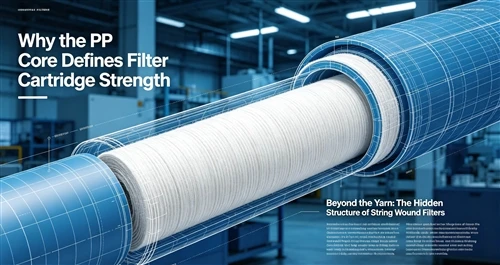
Inside every string wound filter cartridge, the core does much more than provide a place to wind the yarn. Its material, geometry, wall structure, open area, dimensional accuracy, and mechanical strength can all influence how the finished cartridge behaves during manufacturing and under operating pressure.
A poorly designed core can contribute to uneven yarn winding, dimensional deformation, unstable flow paths, and inconsistent filtration performance. A properly designed PP filter cartridge core, on the other hand, helps create a stable foundation for the entire filtration structure.
For manufacturers, distributors, and industrial filtration buyers, understanding the role of PP core design can lead to better product selection-and fewer problems in the field.
The PP Core Is the Structural Foundation of a String Wound Filter Cartridge
A typical string wound filter cartridge consists of three essential elements:
- The filtration yarn
- The internal support core
- The controlled winding structure that connects them
The yarn provides the filtration media. The winding pattern creates the depth-filtration structure.
The core provides the foundation.
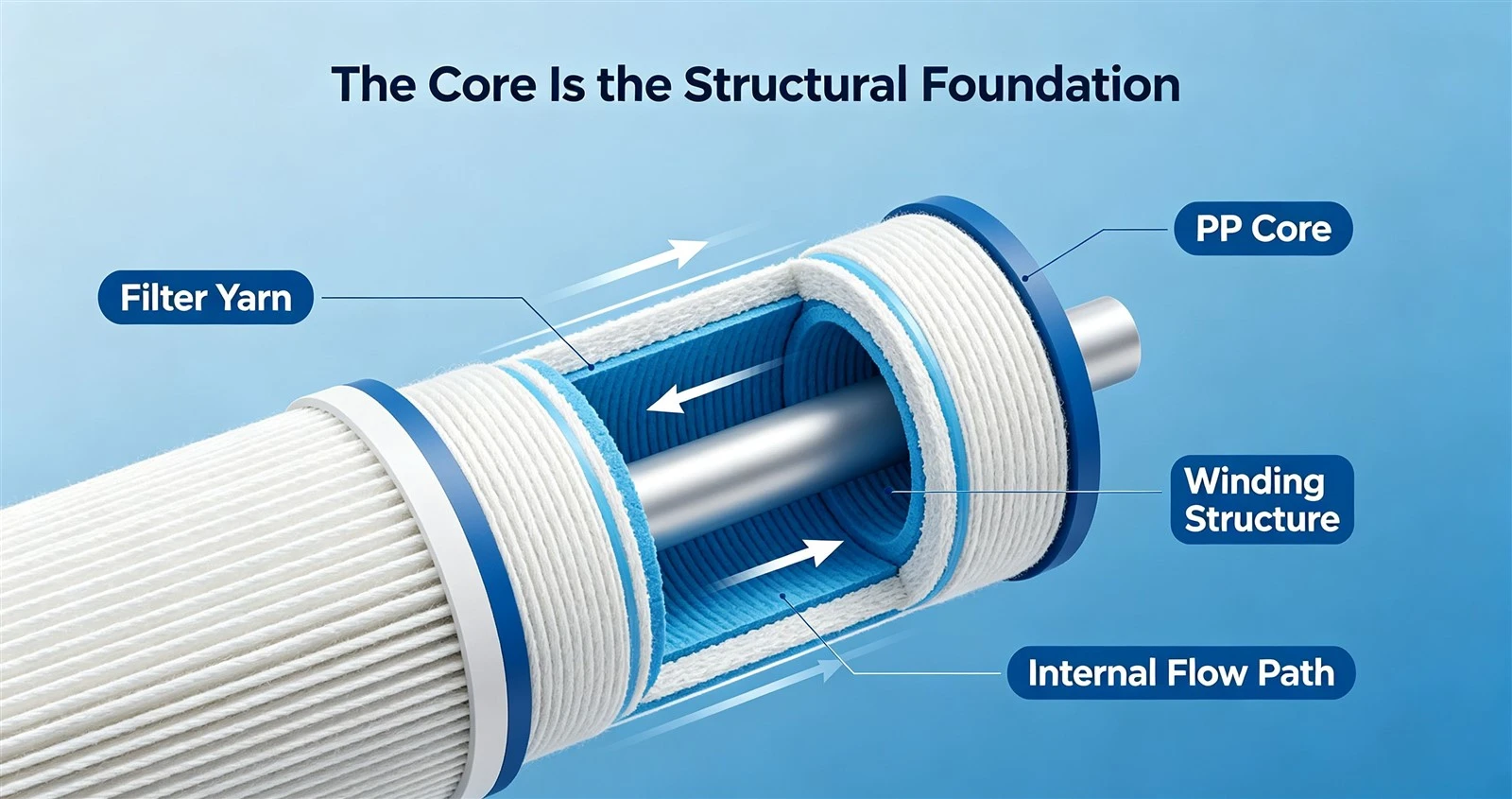
During production, thousands of turns of yarn may be applied around the core under controlled tension. During operation, the cartridge must maintain its shape while liquid flows through the filtration media and into the internal structure.
This means the core is involved in two critical stages:
- Manufacturing stability
- Operating stability
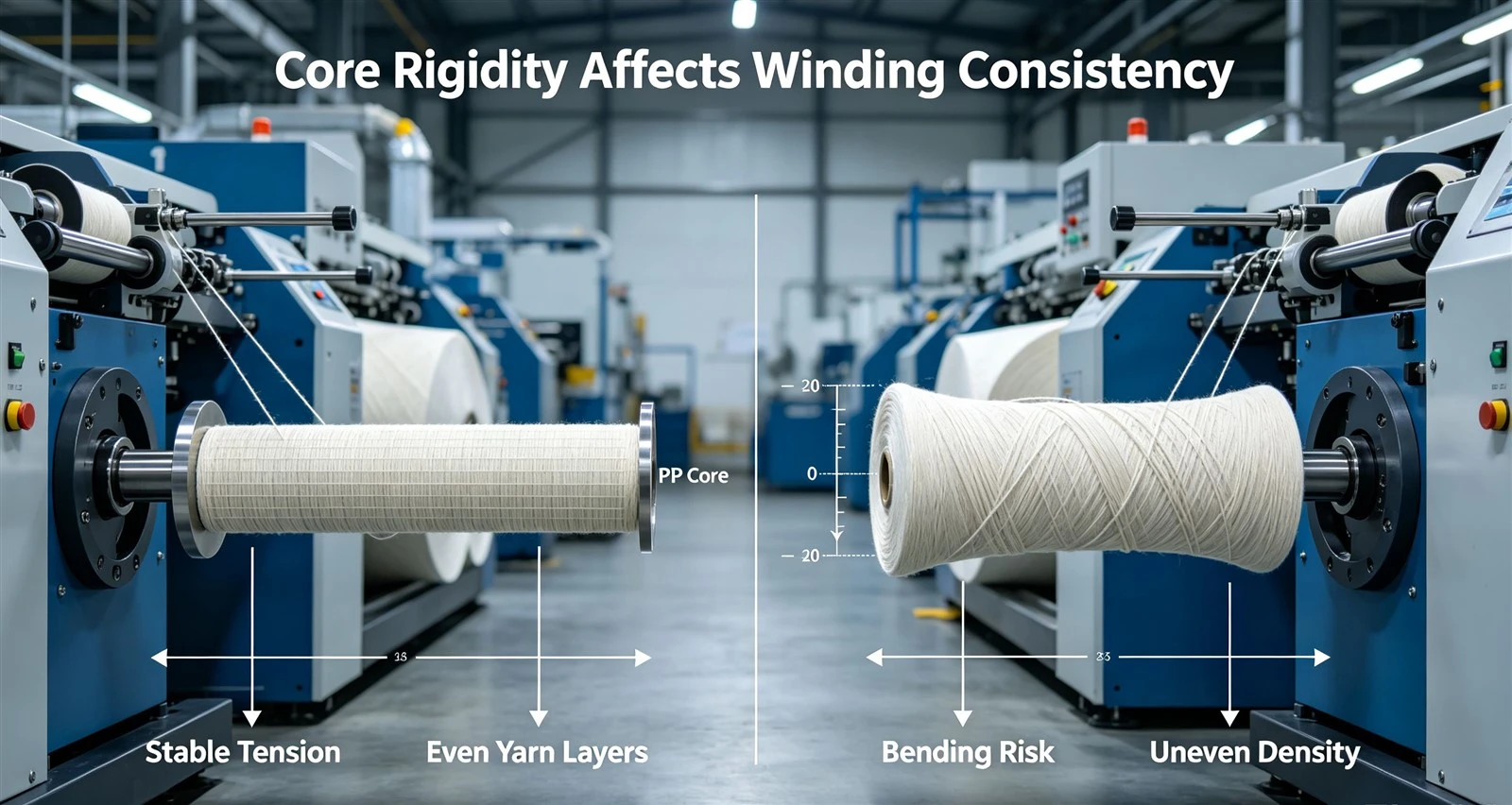
If the core is not sufficiently rigid during production, the yarn may not be distributed evenly.
If the core deforms during operation, the filtration structure surrounding it may also be affected.
This is why the PP core for string wound filter cartridges should be viewed as an engineering component-not simply a plastic tube.
ANDA manufactures PP cores specifically for filtration applications, including internal support structures used in wound filter cartridge production. The company's product range also includes PP yarn and finished string wound filter cartridges, providing a broader understanding of how these components interact throughout the manufacturing process.
Why Core Design Matters More Than Many Manufacturers Realize
Imagine two filter cartridges produced using the same:
- PP yarn
- Winding machine
- Micron specification
- Cartridge dimensions
The only difference is the internal core.
One core has consistent dimensions, sufficient rigidity, and a well-designed support structure.
The other has uneven geometry, limited structural strength, or excessive deformation under load.
The finished cartridges may initially look similar.
However, differences can become visible during production or operation.
The weaker core may contribute to:
Uneven winding density
Poor cartridge concentricity
Reduced mechanical stability
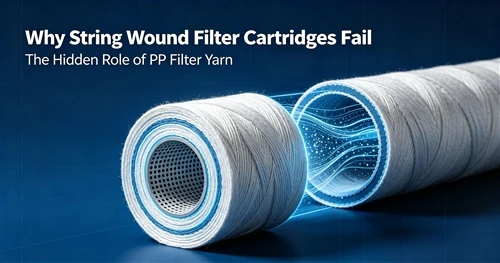
Distorted internal flow paths
Inconsistent pressure performance
Difficulty maintaining dimensional accuracy
The stronger and more consistent core provides a stable reference point around which the entire filtration structure is built.
In other words:
The yarn determines much of the filtration media, but the core determines whether that media has a stable structure to work from.
Core Rigidity Affects Yarn Winding Quality
The first major role of a PP core begins before the filter cartridge is ever installed.
It begins on the winding machine.
During manufacturing, yarn is applied to the core under controlled tension. The winding system depends on the core maintaining its position and geometry throughout the process.
If the core flexes, bends, or deforms too easily, several problems may occur.
Uneven Yarn Distribution
A slightly distorted core can cause the distance between the winding mechanism and the core surface to change.
This may result in inconsistent yarn placement.
Variable Winding Density
When the geometry of the core changes, yarn tension and layer distribution can become less uniform.
The finished cartridge may have sections that are:
- Too dense
- Too loose
- Slightly irregular
- Less consistent from one production run to another
Reduced Dimensional Accuracy
For filter cartridges that must fit standardized housings, concentricity and dimensional consistency are important.
A core that does not maintain its shape can make it more difficult to produce cartridges with repeatable dimensions.
For high-volume manufacturers, these small deviations can become significant.
A cartridge may still pass a basic visual inspection while containing internal structural differences that affect filtration performance.
PP Core Geometry Influences Cartridge Strength
The physical shape of the core is just as important as the material itself.
A filter cartridge core may contain a combination of:
- Open slots
- Holes
- Ribs
- Support sections
- Reinforced walls
- Flow channels

These structural features must balance two competing requirements.
The core needs to be:
Strong enough to support the cartridge
But also:
Open enough to allow efficient liquid flow
A core with excessive open space may reduce the amount of structural material supporting the wound filter media.
A core with too little open area may create unnecessary resistance to flow.
Good PP core design is therefore a balance between structural support and hydraulic performance.
This is one reason why core geometry should not be copied blindly from a visual sample.
A small change in:
- Wall thickness
- Hole size
- Slot arrangement
- Rib design
- Open area
Can influence how the cartridge behaves in actual use.
ANDA's PP core range is designed as an internal support structure for wound filter cartridges, with polypropylene-based construction intended to support stable winding and consistent filtration performance.
Dimensional Accuracy Helps Maintain Filtration Consistency
A filter cartridge is not manufactured as a collection of independent parts.
Every component affects the others.
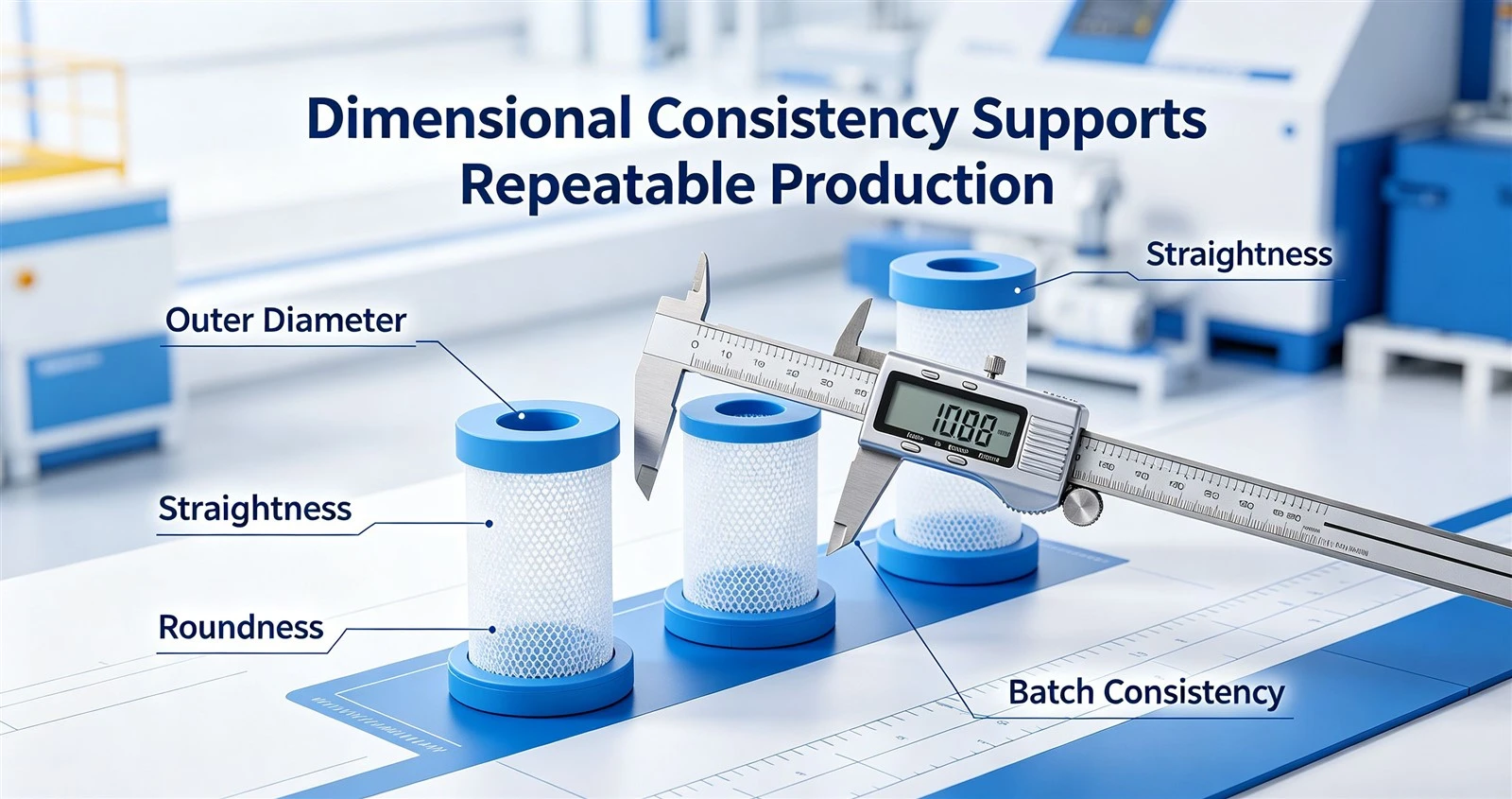
Consider the outside diameter of the PP core.
If that diameter varies between batches, the winding process may produce different results even when the machine settings remain unchanged.
For example:
- A slightly larger core can change the starting diameter of the wound media.
- A slightly smaller core may alter the amount of yarn required to reach the final cartridge diameter.
This can influence:
Media density
Total yarn consumption
Filtration structure
Pressure drop
Cartridge weight
The same principle applies to:
Core length
Roundness
Straightness
Internal diameter
Wall thickness
For manufacturers producing standardized industrial cartridges, dimensional consistency is essential for maintaining repeatable production.
This is particularly important for longer cartridges.
A 10-inch cartridge may tolerate certain manufacturing variations that become more noticeable in a 40-inch or 60-inch configuration.
As cartridge length increases, the importance of structural stability becomes more significant.
Core Strength Helps Resist Deformation Under Operating Pressure
Once the cartridge is installed in a filtration system, it faces a different type of stress.
The cartridge may experience:
- Continuous liquid flow
- Differential pressure
- Changing flow rates
- Contaminant accumulation
- Temperature changes
- Chemical exposure
As contaminants accumulate within the wound media, pressure resistance across the cartridge can increase.
The entire structure must remain stable.
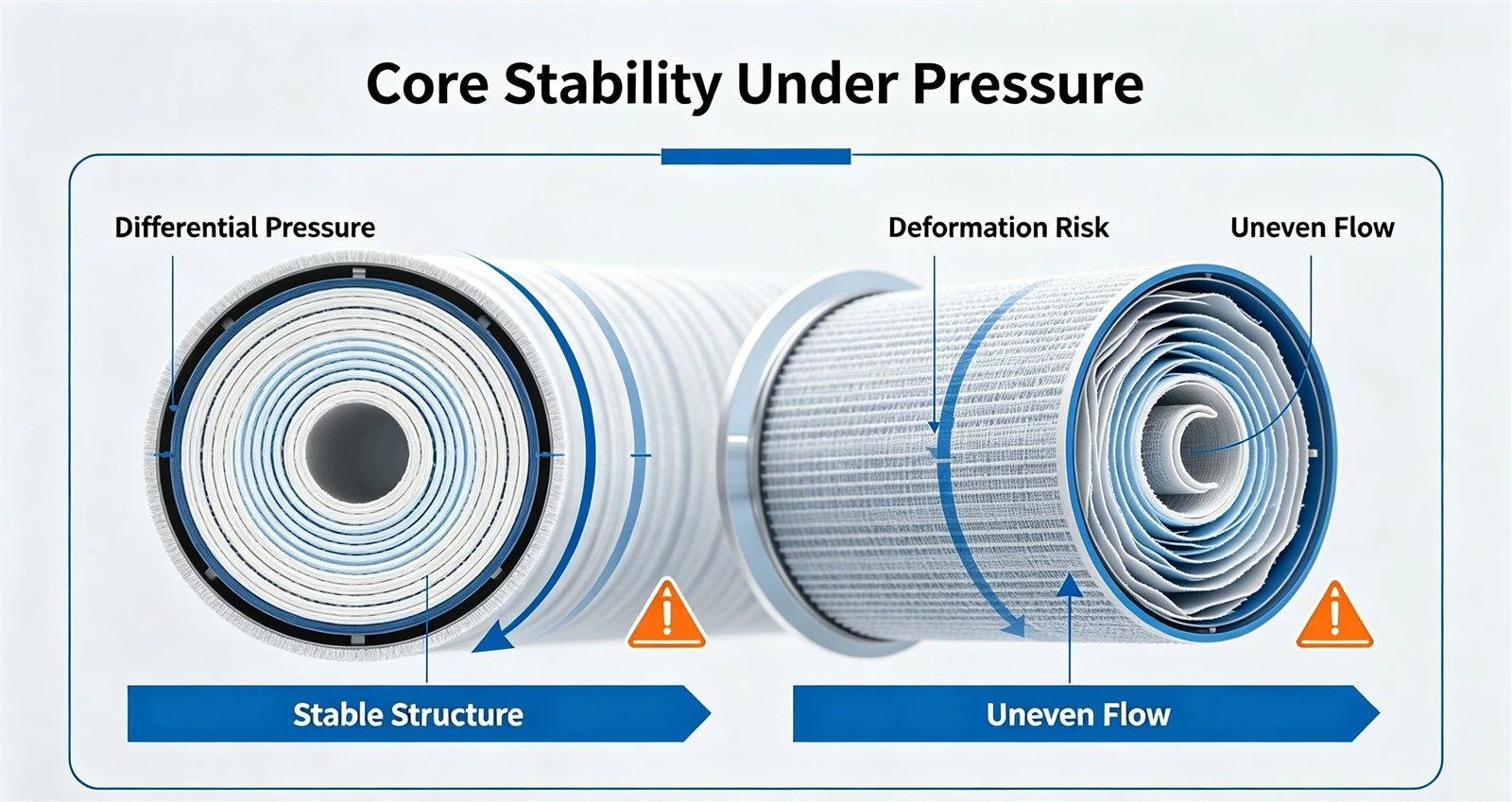
The PP core plays an important role in maintaining the internal shape of the cartridge.
If the core loses dimensional stability, the surrounding filtration media may experience changes in:
- Compression
- Internal support
- Flow distribution
- Structural alignment
A strong core does not mean that the filter can operate under unlimited pressure.
The complete cartridge design-including the yarn, winding density, core structure, and housing-must be evaluated as a system.
However, the internal core remains one of the key components supporting the cartridge structure.
This is why material selection and structural design should always match the intended operating environment.
Open Area Affects Internal Flow Performance
One of the most important-and least visible-design characteristics of a filter core is its open area.
The liquid entering a string wound filter cartridge typically passes:
- Through the outer filtration layers
- Through the progressively denser media structure
- Into the internal support core
- Toward the outlet of the filtration system
The core therefore becomes part of the internal flow path.
If the available open area is too limited, it may contribute to unnecessary resistance.
If the structure is too open without sufficient reinforcement, mechanical stability may be reduced.
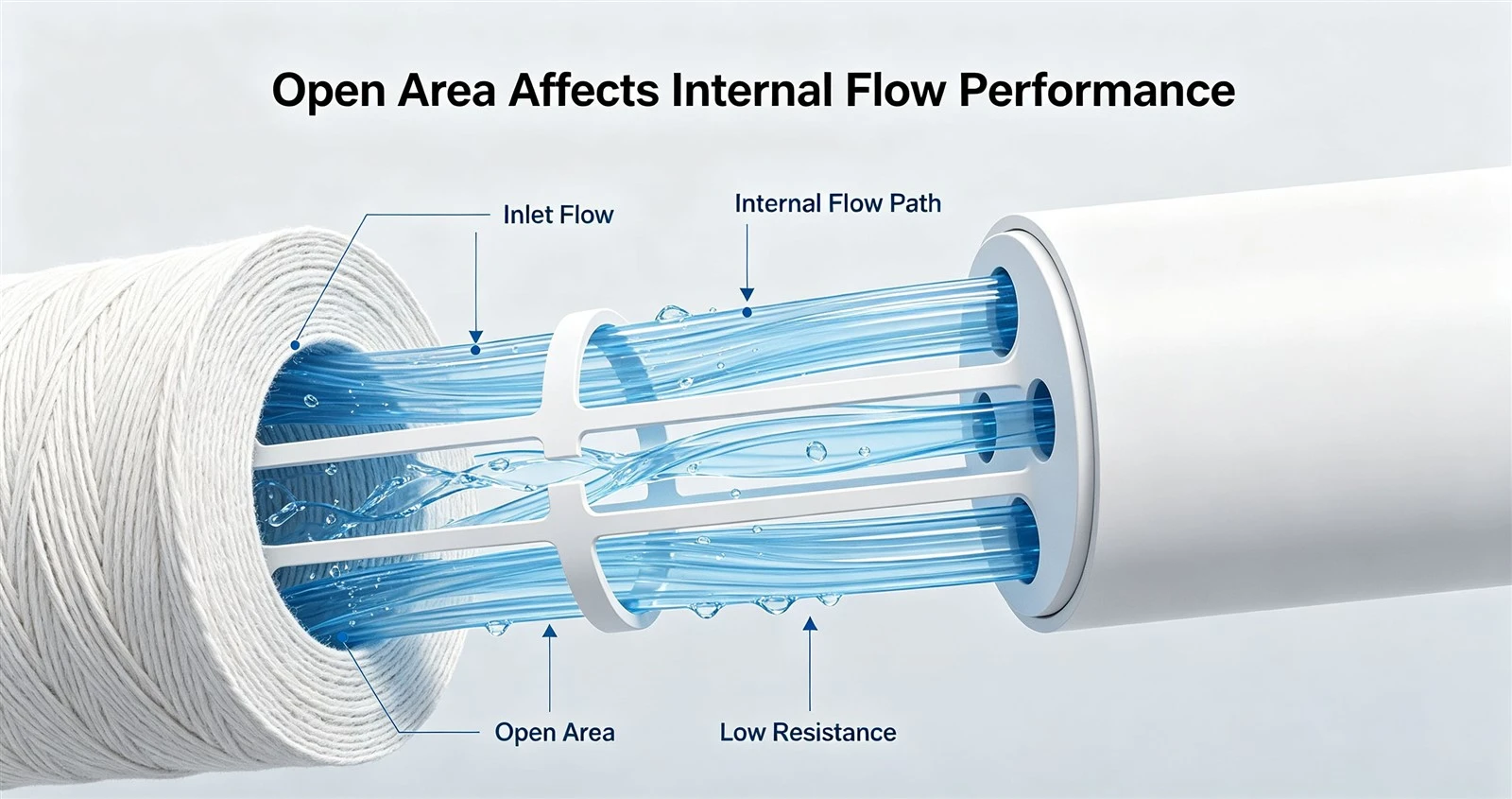
The challenge is to create a structure that provides:
- Sufficient liquid access
- Stable support for the media
- Reliable mechanical strength
- Consistent internal flow
This is another reason why a core should not be evaluated only by weight.
A lighter core may use less material, but reduced material does not automatically mean better design.
Likewise, a heavier core is not automatically stronger in the areas that matter.
The arrangement of the material can be just as important as the amount of material.
The Relationship Between PP Core Design and Dirt-Holding Capacity
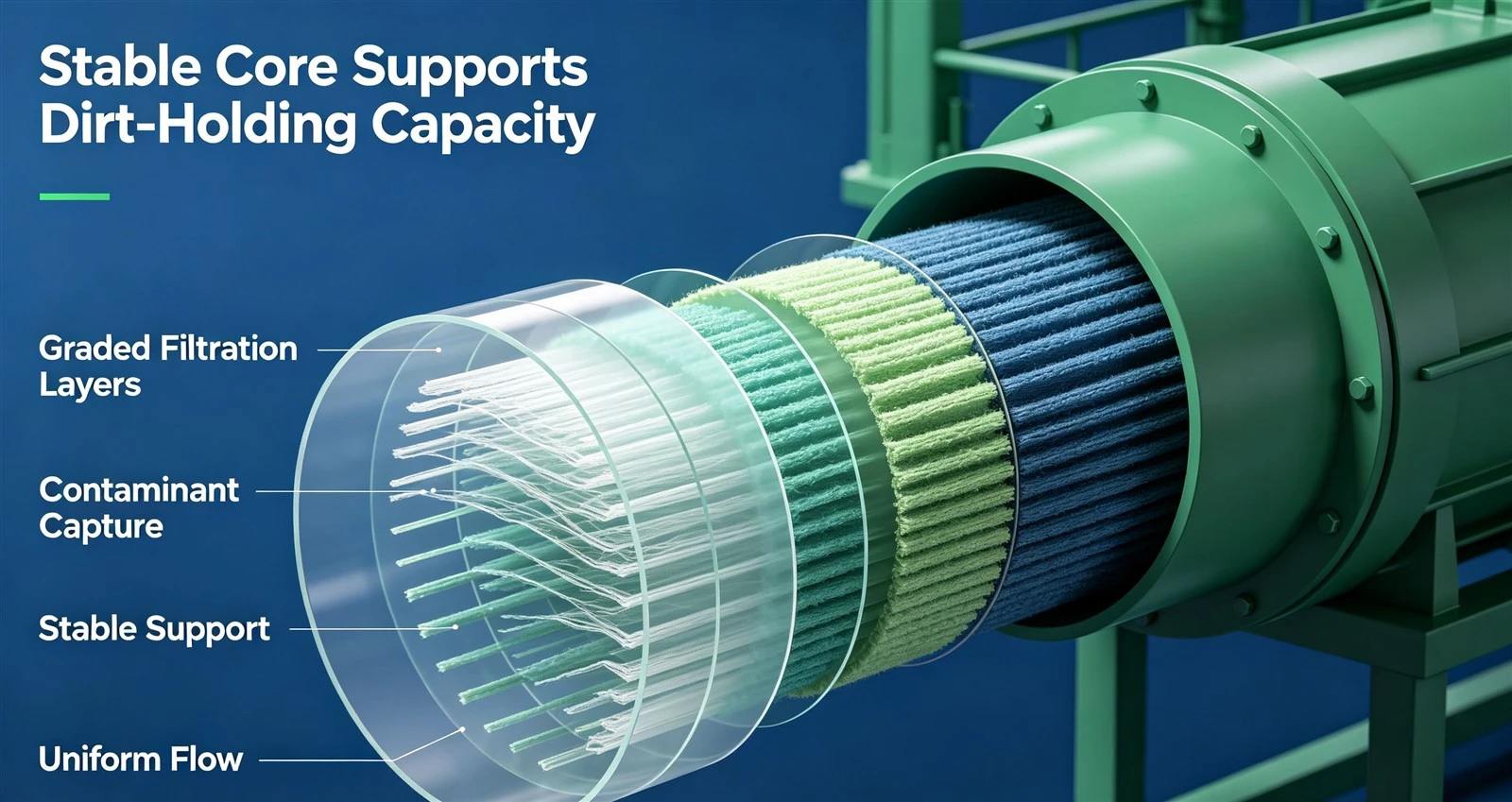
Dirt-holding capacity is usually associated with the filtration media.
That is true-but the core can still influence how effectively the media structure is supported.
A string wound cartridge is designed to capture contaminants throughout multiple layers of yarn.
For this depth-filtration structure to work efficiently, the wound media must remain stable.
If the internal support structure changes shape, the yarn layers around it may experience uneven stress.
This can potentially affect the distribution of flow through the media.
A well-designed PP core helps maintain a stable internal foundation so that the winding structure can continue performing as intended.
This is particularly important in applications involving:
- High contaminant loading
- Long operating cycles
- Large-volume filtration
- Industrial process liquids
ANDA's string wound filter cartridge range is designed for depth filtration applications and offers multiple material and size configurations for industrial and water-treatment requirements.
Why Core Material Matters: Polypropylene Advantages
Polypropylene is widely used for filter cartridge cores because it offers a practical combination of properties for many filtration environments.
Depending on the specific grade and operating conditions, polypropylene can offer advantages such as:
Good chemical compatibility
Low moisture absorption
Lightweight construction
Resistance to many aqueous environments
Good processability for molded components
For water treatment and many industrial filtration applications, PP can provide an effective balance between performance and cost.
However, polypropylene is not suitable for every application.
Operating conditions should always be considered, including:
- Temperature
- Pressure
- Chemical exposure
- Fluid composition
- Required service life
For higher-temperature or specialized applications, stainless steel cores may be a more appropriate choice.
The important principle is not that PP is universally better.
It is that the core material should match the operating environment.
Injection Molding Quality Can Affect the Final Cartridge
PP core performance is influenced not only by design but also by manufacturing quality.
Injection molding parameters can affect the consistency of the finished component.
For example, variations in the manufacturing process may influence:
- Dimensional accuracy
- Surface finish
- Wall consistency
- Structural integrity
- Repeatability between batches
For filter cartridge manufacturers, inconsistent core production creates a chain reaction.
A core with slightly different dimensions can require adjustments during winding.
Those adjustments may then affect:
- Production speed
- Yarn consumption
- Cartridge density
- Quality consistency
This is why experienced cartridge manufacturers often treat the PP core as a controlled production component.
It should have defined specifications and quality standards rather than being sourced purely as a low-cost plastic part.
ANDA states that its PP core production uses polypropylene-based materials and controlled manufacturing processes for wound filter cartridge applications, while its broader filtration product range includes both the raw filtration yarn and finished cartridges.
PP Core vs "Just a Plastic Tube": The Procurement Mistake
One common procurement mistake is assuming that all PP cores with similar dimensions are interchangeable.
For example:
"If the length and diameter are the same, the cores should perform the same."
Not necessarily.
Two cores with identical external dimensions may differ in:
- PP material grade
- Wall thickness
- Open-area ratio
- Rib structure
- Weight distribution
- Straightness
- Dimensional tolerance
- Mechanical rigidity
These differences may not be obvious when comparing two samples by hand.
But they can become important during automated production or long-term filtration.
For this reason, buyers should avoid evaluating PP cores based solely on:
- Unit price
- Color
- Basic dimensions
A more complete evaluation should include both the core itself and its performance inside a finished filter cartridge.
How to Evaluate a PP Core for String Wound Filter Cartridge Manufacturing
Before selecting a PP core supplier, manufacturers should evaluate several important factors.
1. Dimensional Consistency
Check:
- Length
- Outside diameter
- Inside diameter
- Straightness
- Roundness
Consistency is often more important than a single measurement.
A supplier should be able to maintain specifications from batch to batch.
01
2. Mechanical Stability
Evaluate whether the core can maintain its structure during:
- Yarn winding
- Handling
- Assembly
- Operating pressure
The appropriate test conditions should reflect the intended cartridge design and application.
02
3. Core Geometry
Look at:
- Slot pattern
- Hole pattern
- Open area
- Rib structure
- Wall design
The goal is to balance liquid flow with mechanical support.
03
4. Material Quality
Ask about:
- Polypropylene source
- Material consistency
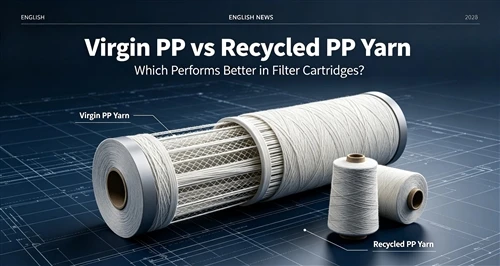
- Virgin or recycled content
- Chemical compatibility
- Temperature limitations
The right material depends on the application.
04
5. Compatibility With Your Winding Process
A PP core should work with the manufacturer's existing:
- Winding machines
- Yarn specifications
- Cartridge dimensions
- Production speeds
This is especially important for OEM filter cartridge manufacturers.
05
A core that looks correct on paper may still require adjustments during actual production.
The PP Core and PP Yarn Must Work Together
The most reliable string wound filter cartridges are not created by optimizing one component in isolation.
The PP core and PP yarn form a system.
The core provides the structural platform.
The yarn creates the filtration media.
The winding process connects them.
If the core is too weak, the yarn structure may become unstable.
If the yarn is inconsistent, even a strong core cannot guarantee uniform filtration.
If the winding process is poorly controlled, neither component can fully compensate.
This is why manufacturers should consider the complete production chain:
PP Yarn → PP Core → Winding Process → Finished Filter Cartridge
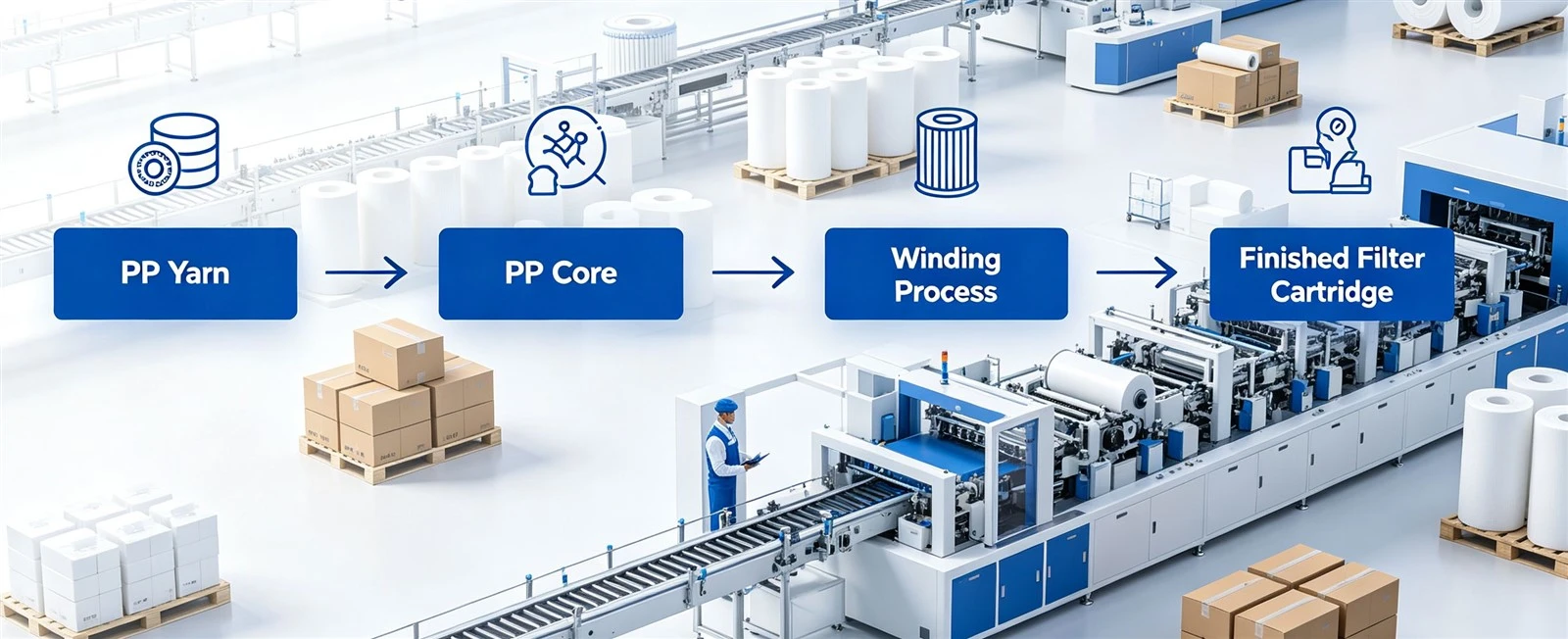
ANDA's product structure covers this complete relationship, supplying PP yarn, PP cores, and finished string wound filter cartridges. This integrated product focus allows the company to understand the compatibility issues that can arise between raw materials, internal support structures, and finished filtration products.
Why Integrated Supply Can Reduce Manufacturing Risk
For filter cartridge manufacturers, sourcing each component from a completely different supplier can create additional challenges.
For example:
The yarn supplier may optimize only for textile performance.
The core supplier may optimize only for low-cost molding.
The cartridge manufacturer must then solve the compatibility issues.
This can lead to more:
- Trial production
- Process adjustments
- Material testing
- Inventory complexity
- Quality disputes
Working with suppliers that understand multiple parts of the filtration structure can simplify technical communication.
ANDA serves both domestic and international markets and supplies products across the PP yarn, PP core, and string wound filter cartridge categories.
This allows the company to support customers at different stages of the supply chain-from manufacturers purchasing raw materials to industrial buyers sourcing finished filtration products.
For buyers, this can make technical discussions more practical because the conversation can focus on the final manufacturing result rather than a single isolated component.
Common PP Core Problems and What They Can Cause
Understanding common failure points can help manufacturers identify the importance of core design.
Problem: Core Bending
Possible result:
- Uneven winding
- Poor cartridge straightness
- Installation difficulty
Problem: Inconsistent Diameter
Possible result:
- Variable media density
- Changes in yarn consumption
- Inconsistent cartridge performance
Problem: Insufficient Structural Strength
Possible result:
- Deformation during manufacturing
- Reduced support under operating conditions
- Unstable internal structure
Problem: Poorly Balanced Open Area
Possible result:
- Increased flow resistance
- Reduced internal liquid access
- Potential structural weakness
Problem: Inconsistent Batch Quality
Possible result:
- More machine adjustments
- Reduced production efficiency
- Difficult quality control
These issues demonstrate why the core should be evaluated as part of the overall filtration design.
How ANDA Approaches PP Core and String Wound Cartridge Manufacturing
For ANDA, the PP core is not treated as an isolated commodity.
It is part of a larger filtration manufacturing system.
The company's product range includes:
This product structure supports customers with different purchasing needs.
A filter cartridge manufacturer may purchase PP yarn and cores for its own production.
An industrial distributor may purchase finished string wound cartridges.
A water-treatment company may require a specific filtration configuration for its operating conditions.
ANDA's PP core products are designed as internal support structures for wound filter cartridges, while its finished cartridge range covers different sizes, micron ratings, materials, and industrial applications.
By understanding the relationship between material selection, core design, and cartridge construction, manufacturers can make more informed decisions about both performance and total production cost.
Final Thoughts: A Better Filter Cartridge Starts From the Inside
The outside of a string wound filter cartridge may receive most of the attention because that is where the filtration yarn is visible.
But the cartridge's long-term stability begins inside.
The PP core influences:
Winding accuracy
Structural support
Cartridge straightness
Dimensional stability
Internal flow
Manufacturing consistency
A poorly designed core can introduce problems that are difficult to identify until production or operation.
A well-designed core provides a stable foundation for the filtration media and helps manufacturers build cartridges with more consistent performance.
For industrial filtration manufacturers, the key lesson is simple:
Do not evaluate a PP core as just another plastic component. Evaluate it as part of the filtration system.
When the PP yarn, PP core, and winding process are designed to work together, manufacturers have a stronger foundation for producing reliable string wound filter cartridges.
For companies looking for PP yarn, PP cores, or finished filtration products, ANDA supports both domestic and international markets with products designed around the practical requirements of industrial filtration manufacturing.
Because in a string wound filter cartridge, what you cannot see may be just as important as what you can.
Frequently Asked Questions
1. What is the function of a PP core in a string wound filter cartridge?
The PP core provides the internal structural support around which the filter yarn is wound. It helps maintain cartridge shape, supports consistent winding, and forms part of the internal flow path.
2. Does PP core design affect filtration performance?
Indirectly, yes. The core can influence the stability of the wound media, cartridge geometry, and internal flow conditions. These factors can affect how consistently the filtration structure performs.
3. What should manufacturers consider when choosing a PP filter cartridge core?
Important factors include dimensional consistency, mechanical strength, core geometry, open area, material quality, chemical compatibility, and compatibility with the intended winding process.
4. Why is dimensional consistency important for PP cores?
Changes in core dimensions can affect yarn winding, cartridge density, and finished cartridge dimensions. Consistent cores help manufacturers maintain stable production settings and repeatable product quality.
5. Can PP cores be used in all filtration applications?
No. PP cores are suitable for many water-treatment and industrial filtration applications, but operating temperature, pressure, and chemical exposure should always be evaluated. For some high-temperature or specialized applications, stainless steel may be a better option.
6. Why choose a supplier that provides both PP yarn and PP cores?
A supplier familiar with both components may better understand how yarn properties, core design, and the winding process interact. This can simplify technical communication and help manufacturers optimize the complete string wound filter cartridge structure.