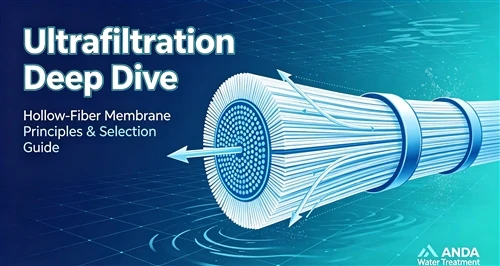
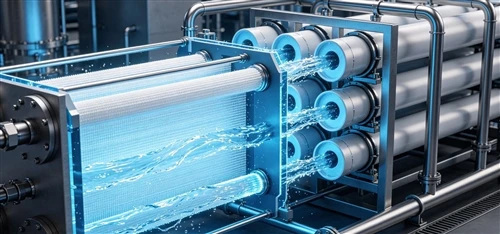
UF, also called hollow fiber, is a physical sieving process that separates liquids by using the pore size of ultrafiltration membranes; the pore size is generally 0.1-0.01 microns. In water treatment, it can mainly filter bacteria, viruses, carbon powder and other large molecular organic matter However, it cannot effectively remove low-molecular-weight organic substances such as pesticides, herbicides, detergents, heavy metals, and harmful substances such as iron and manganese ions generated during the transportation of tap water. The water purified by ultrafiltration water purification products can meet the standards for direct drinking, but the overall filtration effect and water quality are not good.
The membrane filtration method of an ultrafiltration membrane using a pressure difference as a driving force is ultrafiltration membrane filtration. Ultrafiltration membranes are mostly made from acetate fibers or polymer materials with similar properties. It is most suitable for the separation and enrichment of solutes in processing solutions. It is also commonly used for the separation of colloidal suspensions that are difficult to complete by other separation technologies. Its application field is constantly expanding.